Wednesday, April 19, 2023
A fun, "full spectrum" system for those who want to travel lighter and who don't mind using good APS-C ("cropped frame") cameras.
Digging a little further into one of the new Lightroom Presets. "Polished Portrait."
I think some readers were a bit hasty to give the human version of the images I showed yesterday a quick win. I'm not sure everyone understands that it's not a "me" versus "binary setting on the machine" contest that I was trying to communicate. What I was trying to do is to point out that the new preset is a very, very good starting point for anyone trying to retouch a portrait. And here's why:
The settings you get when you choose Polished Portrait (or any other of the new, A.I. driven presets) is not a binary setting, etched into stone that you must either accept or decline. Far from it. Rather, the preset does a lot of heavy lifting to quickly mask all the parameters you might wish to further enhance in a portrait in one smooth step. I've included a screen shot of part of a sub-menu in Lightroom from a similar test this morning. Yesterday's sample gave me back 17 different layers which allowed for corrections in small parts of the overall image. Today's sample gave me 9 layers. You can see in the screen shot that Polished Portrait gives me nine discreet, masked layers along with the option to add additional layer masks manually. The number of layer choices will vary by image and also by any work you have already done on a file.
When one clicks on one of the masks, like "eyebrows", you get a full menu of controls like the one on the right side of the screen shot. The image of the subject shows you, via a color mask, which area you are working on. You now have many options just for eyebrows. You can increase or decrease the shadow slider which makes the eyebrows darker, and which appears to make them also look fuller. You could enhance clarity, change colors, even apply curves if you want to. The range of control and the amount of final changes to the file are limited only by your choices. But, importantly, each of the very accurately masked selections is there for you to enhance, de-enhance or ignore. The preset is there as a powerful assist, not an arbiter of style or taste.
If I had dived more deeply into the file created yesterday I might have pulled some of the shadow out of the eyebrows since that seemed to be the area that vexed most readers. I personally liked the way the preset presented the eyebrows to me and if the image was made for myself I would have gladly left it that way --- but the point is that you have absolute control over each of the masked selections. That doesn't make my manually arrived at version "the winner." It just means I didn't make the same choices as the preset and it didn't make the same choices I did.
There were a few things that sidetracked some readers. One being the skin color. It was suggested that the preset made the skin tone too yellow. But checking the selected mask for skin tone showed me that no changes had been make in the preset to the skin color. That was a global adjustment I made after the fact. That one is on me.
But I think people have the tendency to want to prove automatic analysis and automatic setting suggestions like this as "not ready for prime time" and in doing so they miss the absolute value of the automation for making precise masked selections for adding overall control to image editing.
If we divorce this time saving addition to portrait retouching in LRC from the existential angst currently being generated by generative A.I. programs like DALL-e and Midjourney, and also ChatGBT we can see that at it's core this is a method merely to identify and mask selective parts of the image and then "suggest" changes/enhancements to each individual segment. Don't want to change the eyebrows at all? Then disable that selection. Want more control over the whiteness of the subject's teeth? Well, click on that selection and get to work.
But to couch the process as some sort of contest between a human photographer and the machine is the wrong way to look at this. It would be similar to all those early Photoshop users, myself included, who used the program before you had "command Z". There was not such thing as an "undo" command. You saved and saved and saved your work as you went. And I'm sure there were some hot shot early adapters who thought everyone who wanted an "undo" command was some sort of tyro pussy who couldn't understand the value of neolithic computing. No layers either. No... I could go on. I usually do...
Each step forward in programming like this is a time saver and wholly welcome by the folks who already spend a lot of time retouching. And it's all under your control.
It's okay, I guess, to hate technology, and by extension, any change. But let's not assume that because you got a sample from me that you didn't like that all the fault lies with the program or that the things you didn't prefer aren't readily changeable and controllable. Now more than ever before.
The presets are supplied to you for free. It's considered an upgrade by most. But you don't need to click on them if you prefer to do all the selections, masking and layering for yourself. It's always your choice. The thing we should be on guard against are programs that don't give you any choice. Now that would be bad.
Let's resist the temptation to toss the screaming baby out with the bathwater. Let's just learn to take advantage of some extra control delivered with less work. No contest here.
I drink coffee sometimes while I'm driving. I don't want a clutch and a manual shifter. I love the convenience of automatic transmission. YMMV.
Tuesday, April 18, 2023
Trying out the new "Polished Portrait" preset in Lightroom Classic. Samples.
These two images are from the same image file. I opened the image in the developer screen of LRC and cropped it square. I saved the bottom image as it was when first opened. No changes made to the raw file. The top image had a "one click" change made to it. I selected the "Polished Portrait" preset from the preset menu.
Lightroom automatically made 17 masked layers and applied corrections to all 17 layers without any intervention from me. I'm impressed with the changes and while I might make other decisions this preset will be one of the first I'll try on many of my portraits going forward.
Seems interesting to me.
Studio News: Just as I was about to toss all my lights, stands and modifiers into the garbage and pull back from day to day work several clients called to book up multiple days in late April and throughout May. I thought I might accommodate them. I guess I will. After all, I have to save up money from somewhere to finance that "much needed" Q2 Monochrom.
A thought came to me as I was struggling to lift some weight on a machine at the gym. Can a person who must shoot only with a black and white-only camera then process images on a color monitor.?While monitors can be carefully calibrated there is always some chance that color casts will "enter the picture." How does one accurately work on a monochrome image with a tri-color monitor? Is it really possible? Does the set color temperature subtly influence the way one looks at images? Actually curious.
Hope everyone is happy and well.
Fun, great upgrades in Lightroom Classic (LRC) and a really nice firmware update for the Leica Q2. It's firmware 5.0 for both the monochrome and regular models...
Let's get right to it.
I know the top priority for my readers will be the upgrades to the Leica Q2 so I'll start there. Firmware 5.0's biggest new feature is face and eye detection in AF. I tried it. It works and it's snappy. A plus is that you can use the four way touch pad on the camera to select a preferred eye. Otherwise the camera (like most others) selects the closest eye. It's pretty cool. And needed. And, NO, they can't use a firmware update to give you PDAF.
There are a few other touches such as quicker ways to lock focus in AF-C and the usual hundreds and hundreds of fixes to tiny glitches uncaught before now. It's pretty valuable to have a camera maker continue to make improvements years after a product introduction; especially fixes that obviously benefit the users so much.
The firmware update, version 5.0, is currently available on all the global sites and ready to be downloaded.
It may be the "placebo" effect but my Q2 camera now feels more comfortable to hold and the files seems sharper, better and more interesting than they did yesterday...
In other news Adobe announced and delivered updates to Lightroom and Lightroom classic. The one that is most interesting to me is the "Denoise A.I." which can be found in the noise reduction menu. In short the new tool analyzes the image and figures out which parts should have the most noise reduced (think skies and other less detailed swaths of image) and which parts should have noise reduction and raw image sharpening and improvements made. So, instead of just reducing noise the feature is looking at the entire image and finding places where noise has obstructed wanted detail and then gone in and fixed it.This feature, as far as I can tell, only works on raw files, but it also has some user adjustment to increase or tame down the effects of the processing. I tried it on a 24 megapixel raw files from the Lumix S5 and it worked very well with good noise reduction, good sharpening for detailed parts of the scene and no halo effects. The image took about 20 seconds to process and it left the original file intact while creating an adjusted .DNG file in the same folder.
I am quite interested to see the new presets. Especially the "Polished Portrait" preset. Should be interesting.
Monday, April 17, 2023
I took a selfie this morning and used it for my annual senior swim pass from the city of Austin.
A follow up from Saturday's post. More monochrome sharing.
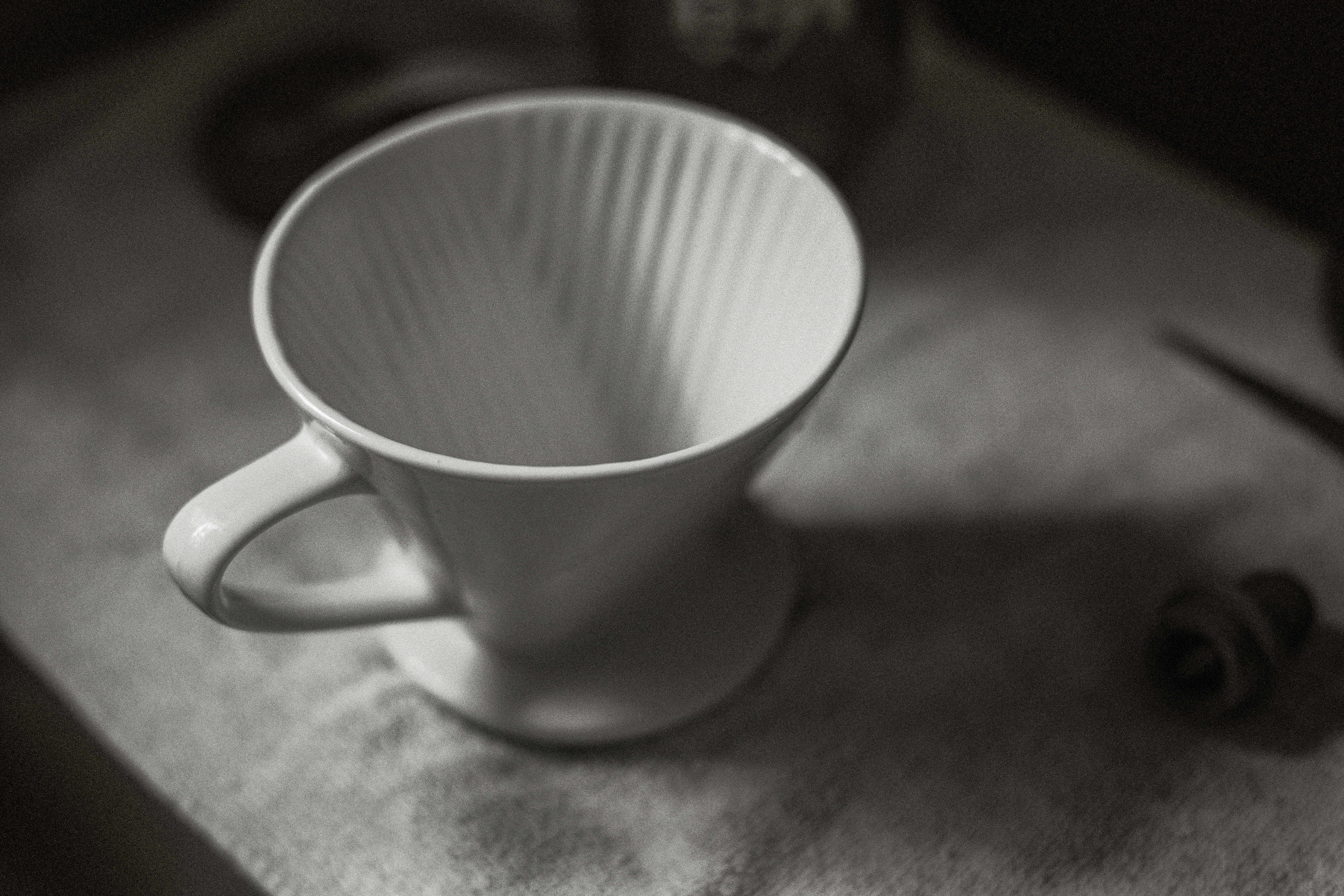
C'è qualcosa nella luce che entra nella mia cucina la mattina presto che mi fa venir voglia di fotografare. Le cose che finiscono nel lavandino hanno un aspetto particolarmente bello. Sabato, dopo aver finito il caffè a casa, ho sciacquato la tazza e l'ho messa nel lavandino. Quando l'ho guardato da un'angolazione mi ha parlato e mi sono sentito obbligato a immortalarlo. Ho preso una Lumix S5 con un obiettivo da 58 mm nella parte anteriore e ho scattato alcuni fotogrammi. Quando ho visto i risultati sui miei provini a contatto digitali (non in Capture One) ho capito che dovevo condividere la bellezza del profilo monocromatico di quella fotocamera. Quando guardo la fotografia mi viene voglia di altro caffè. E più divertenti obiettivi manuali con cui giocare. Se non ti piacciono le immagini in bianco e nero, per favore non essere uno stronzo pedante e fare qualche dichiarazione drammatica che sia offensiva. Menziona solo che ti potrebbe piacere che il colore funzioni un po 'meglio. Eh?
An interesting video about Monochrome sensor cameras by one of my favorite BW photographers: https://www.youtube.com/watch?v=GDxHq3Zlbz8
Sunday, April 16, 2023
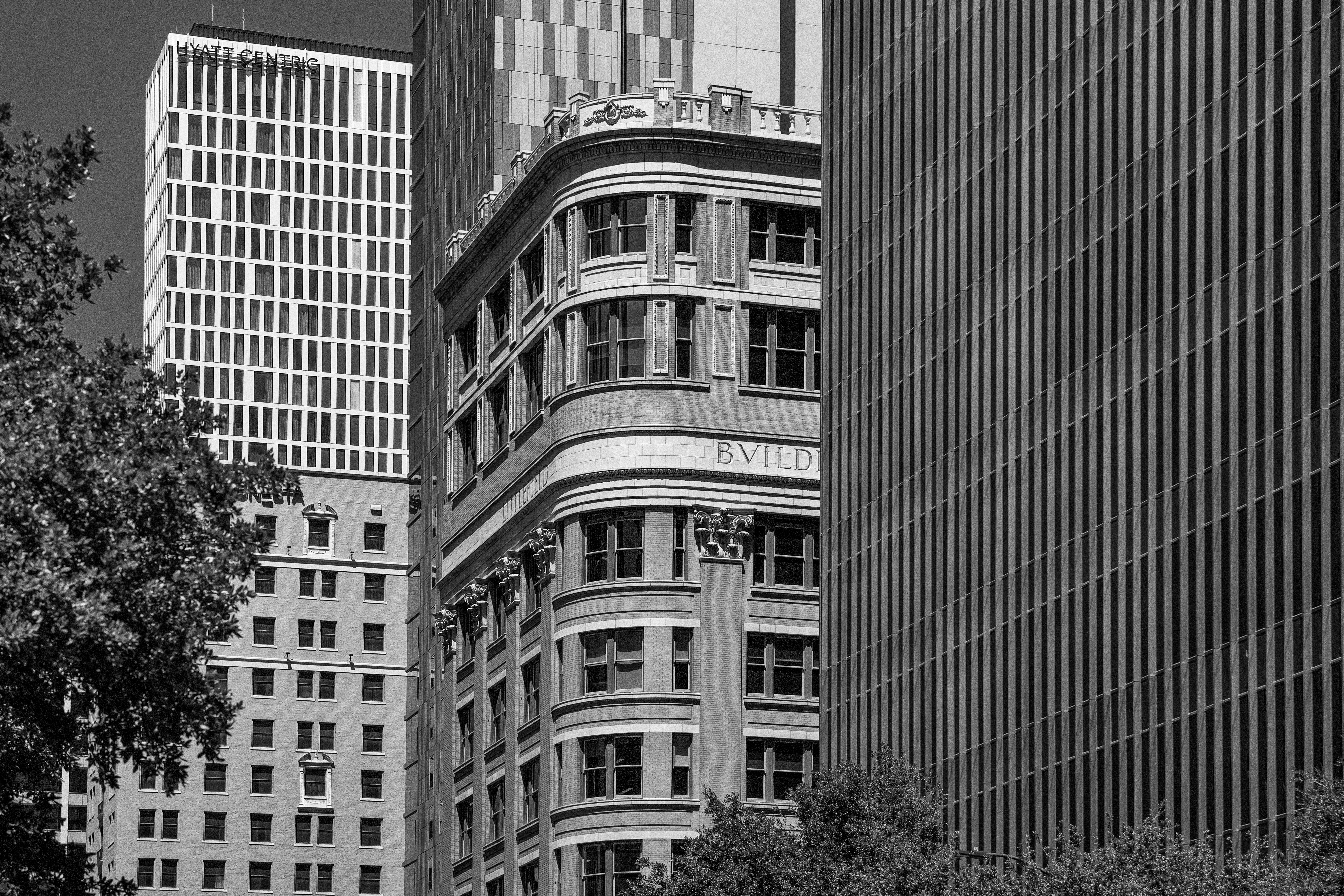
It's Summer in Austin already. It hit 94° Fahrenheit yesterday. The UV warning was pegged at 10 this afternoon. The smell of sunscreen was wafting through the air. The mannequins are ready for the heat. I knew you'd want more...
Today it's the Sigma 90mm f2.8 lens that's getting a workout. I have to say it's an often overlooked optic but a very, very good one. For several reasons. Let's get into it.
I have the 90mm Sigma Contemporary i-Series lens chambered for the L mount cameras. There are many things about this lens that endear it to me. It's small and relatively light weight. The metal finish is both good looking and lends itself to very good handling. The lens has an aperture ring and I find that keeps me in tune with the idea of controlling depth of field. Aperture control on the camera blurs away from my consciousness and I find I've gone a while without thinking about it. The lens hood is big and useful and protective AND matches the finish of the lens. I like the 55mm filter size because I have a box filled with expensive 55mm filters that I now have some reason not to throw away.
I like the lens even more when I use it and am reminded of both how sharp and how optically well behaved it is. Even at its fastest aperture of f2.8. But the feature I realized I liked today was the just about perfect feel and operation of the focusing ring when manually focusing. With practice it's both fast and accurate but best of all it doesn't overshoot like many other FBW lenses do. I like the feel of the focusing ring and after realizing that it would give me both accuracy and tactile happiness I switched everything to manual and spent the day shooting that way.
Even though I don't have affiliate links and your purchases won't benefit me in the least I think every one of you should rush to your keyboards right now and order one of these. You'll thank me after you've tried it out. And....as you can see....it works in color and monochrome.
Les mannequins sont une métaphore de la vie moderne à l'ère post-pandémique. Ils ne bougent pas donc ils sont. C'est un truc de Descartes. Mais heureusement pour nous, nous pouvons les contourner et trouver les meilleurs angles. Ce sont les petits trucs qui nous font chier mais aussi les petits trucs qui nous font plaisir. Ne détestez pas les photos de mannequin. Ils sont là pour une raison... Yeah.
An interesting video about Monochrome sensor cameras by one of my favorite BW photographers: https://www.youtube.com/watch?v=GDxHq3Zlbz8
Getting all the angles lined up perfectly. Every line straight and vertical. So parallel it would make Ezra Stoller cry for joy. Or: ways to suck happiness out of sharing photography...
Bonus: An interesting video about Monochrome sensor cameras by one of my favorite BW photographers: https://www.youtube.com/watch?v=GDxHq3Zlbz8
Saturday, April 15, 2023
Saturday morning art. We are toast.
The refrigerator seems to be repaired now...
Taking a break from throwing Molotov cocktails through windows to do an off topic post about swimming.
Gone Mono. Now going fishing.
I spent yesterday investigating the mono imaging capabilities of a standard Lumix S5 when set to L.Monochrome.D; a higher contrast black and white setting. I also had the EVF set to show only monochrome. It was a fun experiment requiring me to ignore or disregard color in scenes. I allowed the camera to add a little bit of "grain" to the mix. Lumix S5 + Voigtlander 58mm f1.4.
Friday, April 14, 2023
A couple shots from Kirk's Panasonic Lumix S5 Monochrome...
Thursday, April 13, 2023
Shooting outdoors with augmented natural light. Image created as a candidate for a book cover. The editors went in a different direction.
I was writing a book about some aspect of lighting and I decided to shoot a bunch of variations for possible book covers. I asked an attractive friend to pose for me. Since it was work I paid a modeling fee. This was exactly the look I wanted for the book cover but there is a tradition/precedent/agreement in book publishing that while the author has editorial control over the contents of a book, because the cover image is part of marketing for the project, the publisher has authority over the front and back covers. I'm sure if you are a super-hotshot-legendary novelist currently residing in Santa Fe you can make your own rules with the publishers but we newbies don't have that kind of power.
The subject of the chapter I was going to use this image as an example of was about modifying sunlight by using translucent modifiers. A fancy way of saying those pop up reflectors that allow you to take the covers off and shoot through white diffusion material. Cheap to buy and easy to use.
I decided I should do this image exactly with the method I was writing about so I put up a 50 inch round diffusion disk on a stand between my model and a hazy sun. The image had everything I wanted to write about going on in it. Blonde hair for highlight detail. Jet black shirt for shadow detail. A great out of focus background.... just for the heck of it.
The image was shot with a Nikon D700 camera using a 70-300mm f4.5-5.6 lens and just the diffuser on a light stand. It's an image I was quite happy with. Nothing over the top. Nothing too dramatic and certainly an image that would be easy to replicate for a reader of my book.
I can't imagine that a current Leica or Sony camera, or a more prestigious lens would have given me better results. Sharper? Maybe but I think this one is sharp enough on the model's face; which is where I wanted the attention. More resolution? Sure. Maybe four+ times the resolution. But the original would fill a book cover with 300 dpi's of information so to what end?
Image created on December 19, 2008. At 3:15 in the afternoon. Can't believe that was almost 15 years ago!!!
Just reminiscing while other people discuss monochrome cameras. I'll get around to that as soon as my Q2 Monochrom gets here.... gotta test these weird and off the wall conceptions of preferences for myself...
A Popular Question This Month From Blog Members is: Should I buy one of the Leica SL (original) Cameras? "I found one used at a good price..." My answer will be fraught with contradictions.
And the fix doesn't just benefit Leica M lenses. There are numerous really good lenses that were designed before digital came along that have degraded performance when used on most cameras (because of the sensor stacks) but show huge "improvements" when used on an SL. Or an SL2 for that matter. This is why power users of legacy lenses and most M series lenses were interested in the first SL.
Added to that were the advantages inherent in a mirrorless design such as constant preview, fast frame rates, the ability to use a great EVF in conjunction with all different focal lengths and the ability to preview ones potential images right in the finder or on the screen. And the Leica color science.
The SL upped the ante with its build quality. It is one of the few modern cameras that can truly boast weather resistance and from one of the few camera makers to label the camera with an IP 52 rating. No guess work about reliability when it comes to dust and moisture intrusion resistance.
At the time of launch it was a damn expensive camera, retailing for $7450.00 without a lens. In today's dollars it would be closer to $9,000. A lot to pay at the time for a camera which had few workable, full frame, L mount lenses available for it. That was a tough sell. Now the L landscape has changed. Between Sigma, Panasonic and Leica there are dozens and dozens of really great lenses available for the system.
It's a great camera and, about a year and a half ago I bought two of them on the used market for about $1,800 each. Both cameras with all their boxes, packing materials and accessories. I wanted them originally as backup units for my then newly acquired Leica SL2 (current model). I didn't imagine that I would get much use out of them at the time but looking back the SL has been my most used and most enjoyed camera from 2022. The color is really beautiful and the files are sharp in a way that other cameras aren't.
But would I recommend the SL as a budget entry into the L mount system for people who, unlike me, aren't besotted by nostalgia for all things Leica? Nope. Not really.
If I tossed off my history with Leica products (many M series rangefinders, way too many R series cameras and lenses, and several compacts) and just wanted to concentrate on building a workable and productive system around the L mount I would, today, go in a different direction. And I'll tell you why. It would be all about image quality, budget and the fact that camera body performance and value are two things that rarely improve from generation to generation. Nor does resale value.
If I were to buy today I might eschew both the low cost option of the SL (no matter how cool it really does look and feel) nor would I make the same choice I did and buy the SL2. Without considering budget I would instead lock in like targeting radar on the middle ground. The Leica SL2-S. It's the same rugged body as the SL2, the same menu interface, the same beautiful EVF, and even better color science. But available for about $2,000 less than the SL2 when purchased brand new. I have seen used prices lately as low as $3600. It's also been bundled with several different Leica lens options at prices low enough that you can end up getting the included lens nearly free.
While the SL2 has 47.5 megapixels the SL2-S has only 24. But I see that as an advantage, not a detraction. In my experience too many pixels in a camera which does not have scalable raw file capability is mostly a burden. And since the SL2-S sensor is newer, and a BSI version, the high ISO performance is much better than its more expensive sibling. Finally, it's got great specs for video--- though I realize some of you think that video in a predominantly stills oriented camera is the Devil's Work. But all-in-all, if you are interesting in getting a Leica mirrorless, FF camera the SL2-S clicks every box.
If I decided that I just liked the L mount system and the chance to use some of the great Leica SL lenses but didn't want to chase camera specs and obsolescence I'd make different different choices in 2023. If it came right down to it I'd be hard pressed to choose an SL over the Panasonic S5 or S5mkii unless I really needed the advantages provided to hard core M lens users.
The S5 wasn't on the market yet when I started plunging into Leica L compatible cameras like the SL, the SL2 and the CL cameras. The Lumix S5 came along just a bit later and the S5ii really just hit the consumer space last Fall.
I did end up buying the original S5 at launch and, with the exception of the mid-level EVF resolution I've found the camera to be without many flaws, and none of the flaws rise to the worn and stupid phrase: Deal Killer.
If budgets were tight, or if I didn't give an armadillo's butt about the Leica Legend and the brand allure I'd skip the Germanic camera sculpture garden and go straight to a brace of S5ii cameras. On a tighter budget? Right now you can order the previous model, the S5, and get it bundled with a Panasonic 85mm f1.8 lens for the lofty low price of just $1497, new in a box with a USA warranty.
The one disadvantage besides the loss of snob appeal of the S5 cameras is the lower res finder. But other than that, and maybe the depth of the sensor stack, there is nothing to complain about with the S5 cameras.
It's a camera that's got the same basic sensor as the newest Leica SL2-S, the same general high ISO performance and it's smaller, lighter and, for most people, more comfortable to handle (size and weight+grip). You can also buy inexpensive generic batteries for the Lumix instead of having to splash out $285 each for Leica SL/Q2 batteries. And no generics are available for those pricy cameras.
The S5 has a couple of other advantages over the Leicas but they are mostly features in the video space. The audio adapter for the S5 will allow the use of several XLR terminated microphones and will provide phantom power for professional mikes that need it. It's an amazingly good device for videographers. Especially the "one man crews." Oh, an if you get the newer model, the S5ii, you'll also get faster AF because ..... PDAF.
The other advantage comes from the camera's more parsimonious use of electrical power. Since it's not powering up a nearly 6 million dot EVF it doesn't suck battery power at the same rate. So the cheaper batteries also last a longer time. Bonus, bonus.
Choosing the right camera seems tough but if you are logical about decision making it's really not so hard. Once you get over the idea that you "need" a nearly 50 megapixel sensor you've won half the cost savings battle. Once you decide that you probably are never going to buy and use manual focusing M series lenses you can let go of the idea that you "need" a certain sensor stack of filters and color pattern arrays to get the best from your camera. Now you are free to choose the Lumix instead.
Your rich Leica friends may tease you but your even wealthier banker friends will applaud your financial restraint over a piece of gear destined mostly to be used as a hobby device. In case you haven't heard, commercial photography is in the process of being cancelled altogether by our robot overlords.
Doing it all over again? Two S5ii cameras. A smattering of the f1.8 Lumix prime lenses. The 24-105mm zoom and a hard stop. The reality? I'm not pressed to economize so I can buy with my emotions instead of my brain. With that being the case I think you can count on me to keep chasing the ever elusive "value" of the Leica brand. It's more fun for me. But that's probably material for my therapist (if I had one...).
Bottom line? Buy what you can afford AND what makes you happy. Always good when those two parameters intersect where you want them to.
Happy times.