Wednesday, April 19, 2023

A fun, "full spectrum" system for those who want to travel lighter and who don't mind using good APS-C ("cropped frame") cameras.


Boston Mannequin. 
Photographed with a Sony a6300 and a 50mm lens.

Whether you photograph with Sony's APS-C (6000 series) cameras, Fuji's, or the recently discontinued Leica CL digital cameras I consider all of them to be contenders for really good travel "systems." The common thread through these particular makers' cameras are: smaller size, dense and very good imaging sensors and the ability to use Sigma's line of Contemporary lenses designed and made for the smaller formats. 

Each camera system provides at least a 24 megapixel sensor and those sensors are densely packed with pixels which can give images of very high resolution and sharpness when combined with really good lenses. All three brands make decent lenses for their particular cameras buy none of them, in my opinion, match the overall performance of the three Sigma prime lenses I own for the Leica CL cameras and none of them have as well rounded and compact a standard zoom lens as that provided by Sigma in the form of its 18-50mm f2.8. And recently Sigma released their own 23mm lens for those systems. 

All of the primes share one attribute: Their fastest aperture is f1.4. So you will be able to put together a system of primes ranging from 16mm to 56mm and all of them will be of very high speed. With the zoom lens there is a similar benefit, at least over the dedicated lenses that were sold by Leica for the APS-C cameras. Their system standard zoom is the 18-55mm f3.5-5.6. I don't own one and haven't shot one but the maximum aperture of f5.6 at the long end doesn't really make me passionate about adding one. Especially at the premium price...

I currently own three of the primes and with my recent order of the 23mm I'll have all four of their current, fast primes. The 16mm f1.4, 30mm f1.4 and the 56mm f1.4 have been paired up with my Leica CL cameras for about a year now and they bring a lot to the image making table when you consider the difference in size and weight when compared to my full frame cameras and lenses. 

A lot of people like the idea of f1.4 lenses and the Sigmas are decent at that wide aperture but where they really start to shine is from f2.0 on up to f8.0 or even f11. Once you start to stop any one of the primes down you get better and better performance. Actually stellar performance for the price.

I'm writing about them today because I just learned about a photographic retrospective that interests me. Linda McCartney ("The Beatles" Paul McCartney's late wife) was a very active and competent photographer who, in most of her career, had enviable access everywhere she went. She didn't become successful as a photographer as a result of being married to Paul McCartney but had already achieved high esteem for her work previous to their relationship. In fact she was the first woman to have a cover on Rolling Stone Magazine. Here's the wiki about her: https://en.wikipedia.org/wiki/Linda_McCartney

The show is at the The Center for Creative Photography in Tucson. At the University of Arizona. It opened in February and I guess I didn't do a very good job of keeping up. But, thankfully, the show is up until mid to late August 2023. The Center for Creative Photography houses collections from 2200 photographers including people such as Ansel Adams and David Hume Kennerly, and W. Eugene Smith.

The McCartney retrospective is displaying over 124 prints, many very large, and is a treasure trove of music industry images from the 1960s through to the 1990s. 

I decided I need to make a quick trip to Tucson to see the work directly. I also want to see if I can get access to several of the collections by other artists that the CCP houses. I'm putting together a fairly quick itinerary and will probably go toward the end of next week. I'll head over on Wednesday and return Friday evening. I also want to photograph in and around Tucson. Many years ago, in 1985, my advertising agency did a photo shoot at dusk in the Saguaro National Park, just outside of Tucson. I have fond memories of that gonzo event in the park.

It was a wild shoot on which we hung Christmas tree lights over a number of big cacti, lit them up with a large generator and photographed the glowing cacti from dusk into the darkness of night. Or course we had a permit from the National Parks, traffic police for the one lane of the nearby highway we needed to commandeer (much, much less traffic back then), millions of dollars of liability insurance (mostly for the cacti), cherry pickers to allow us access to the tall Saguaros and a team of dedicated stylists to make piles of wrapped gifts and gift-wrapped books under each visible cactus. My assistant and I were shooting as fast as we could as the light fell, knowing there would only be  a few minutes when the light from the cacti matched up well with the sunset and afterglow. I used a Hasselblad with a 50mm lens while my assistant fired away, endlessly bracketing a Nikon F3 and a 28mm lens. Of course these were the film days so if you were going to spend $20K or $30K of a client's money it was just good form to come back with at least one usable frame! And we shot that assignment on unforgiving transparency (slide) film.

The shoot was done for BookStop Bookstores which my agency had helped to grow from two Austin locations to a large chain that spanned 120 stores across the southern U.S.A, from Florida to California. Even to a store in Beverly Hills. They were bought out by Barnes and Noble in 1986 or 1987. I remember doing that shoot, which ran a double truck (two page) spreads in regional editions of Time Magazine, Newsweek Magazine and a few other popular consumer publications, on a financial shoe string. 

In fact, when my assistant and I finished wrapping the shoot, paying the local teams, getting all the gear packed and ready it was 4 a.m. in the morning. With our budget spent all the way to the tipping point and three magazine deadlines looming in a few short days we headed back to the airport for our 7 a.m. flight to Austin and got a quick nap in our rental car before turning it in. We were young then. You could do a few days like that and survive. 

And like most overworked advertising people of that time we just considered actual sleep to be a perk and not an absolute requirement. 

It's fun to think back and realize that we've been doing zany projects like this for real money since the late 1970's. And when you've got money in the mix you can 't just "wing it" or "spray and pray" you actually had to know what you were doing. And have back up plans. A quick way of saying that when we talk about gear here on VSL it comes from hands-on, high stress, actual experience. Not just conjecture and academic hearsay....

I'm looking forward to seeing the Linda  McCartney Retrospective. Her images come from a time when my generation was just coming of age. It should be an interesting step into something like a time machine.

So, I wanted to take along a small and light system with me for my visit to the gallery show and also to have for grabbing fun shots around a Tucson that's grown up a lot since I was last there. The idea of hauling around the big stuff for three days as well as on and off planes didn't seem very appetizing so I decided to piece together a mini system of two Leica CLs, a 16mm, 30mm and the 56mm Sigmas. All of which I own as L mount lenses. The CLs are magnificent little cameras and together with the fast Sigmas represent a formidable system. If the 23mm comes in before I leave I'll likely sub it for the 30mm. Just for grins. 

I've gotten plenty of great images from cropped frame cameras over the years which bolsters my decision to go small and light for what is basically a long distance gallery hop and mini-personal vacation. 

We'll see how it all pans out. 

Digging a little further into one of the new Lightroom Presets. "Polished Portrait."


 I think some readers were a bit hasty to give the human version of the images I showed yesterday a quick win. I'm not sure everyone understands that it's not a "me" versus "binary setting on the machine" contest that I was trying to communicate. What I was trying to do is to point out that the new preset is a very, very good starting point for anyone trying to retouch a portrait. And here's why:

The settings you get when you choose Polished Portrait (or any other of the new, A.I. driven presets) is not a binary setting, etched into stone that you must either accept or decline. Far from it. Rather, the preset does a lot of heavy lifting to quickly mask all the parameters you might wish to further enhance in a portrait in one smooth step. I've included a screen shot of part of a sub-menu in Lightroom from a similar test this morning. Yesterday's sample gave me back 17 different layers which allowed for corrections in small parts of the overall image. Today's sample gave me 9 layers. You can see in the screen shot that Polished Portrait gives me nine discreet, masked layers along with the option to add additional layer masks manually. The number of layer choices will vary by image and also by any work you have already done on a file. 

When one clicks on one of the masks, like "eyebrows", you get a full menu of controls like the one on the right side of the screen shot. The image of the subject shows you, via a color mask, which area you are working on. You now have many options just for eyebrows. You can increase or decrease the shadow slider which makes the eyebrows darker, and which appears to make them also look fuller. You could enhance clarity, change colors, even apply curves if you want to. The range of control and the amount of final changes to the file are limited only by your choices. But, importantly, each of the very accurately masked selections is there for you to enhance, de-enhance or ignore. The preset is there as a powerful assist, not an arbiter of style or taste. 

If I had dived more deeply into the file created yesterday I might have pulled some of the shadow out of the eyebrows since that seemed to be the area that vexed most readers. I personally liked the way the preset presented the eyebrows to me and if the image was made for myself I would have gladly left it that way --- but the point is that you have absolute control over each of the masked selections. That doesn't make my manually arrived at version "the winner." It just means I didn't make the same choices as the preset and it didn't make the same choices I did. 

There were a few things that sidetracked some readers. One being the skin color. It was suggested that the preset made the skin tone too yellow. But checking the selected mask for skin tone showed me that no changes had been make in the preset to the skin color. That was a global adjustment I made after the fact. That one is on me. 

But I think people have the tendency to want to prove automatic analysis and automatic setting suggestions like this as "not ready for prime time" and in doing so they miss the absolute value of the automation for making precise masked selections for adding overall control to image editing. 

If we divorce this time saving addition to portrait retouching in LRC from the existential angst currently being generated by generative A.I. programs like DALL-e and Midjourney, and also ChatGBT we can see that at it's core this is a method merely to identify and mask selective parts of the image and then "suggest" changes/enhancements to each individual segment. Don't want to change the eyebrows at all? Then disable that selection. Want more control over the whiteness of the subject's teeth? Well, click on that selection and get to work. 

But to couch the process as some sort of contest between a human photographer and the machine is the wrong way to look at this. It would be similar to all those early Photoshop users, myself included, who used the program before you had "command Z". There was not such thing as an "undo" command. You saved and saved and saved your work as you went. And I'm sure there were some hot shot early adapters who thought everyone who wanted an "undo" command was some sort of tyro pussy who couldn't understand the value of neolithic computing. No layers either. No...  I could go on. I usually do...

Each step forward in programming like this is a time saver and wholly welcome by the folks who already spend a lot of time retouching. And it's all under your control.

It's okay, I guess, to hate technology, and by extension, any change. But let's not assume that because you got a sample from me that you didn't like that all the fault lies with the program or that the things you didn't prefer aren't readily changeable and controllable. Now more than ever before. 

The presets are supplied to you for free. It's considered an upgrade by most. But you don't need to click on them if you prefer to do all the selections, masking and layering for yourself. It's always your choice. The thing we should be on guard against are programs that don't give you any choice. Now that would be bad.

Let's resist the temptation to toss the screaming baby out with the bathwater. Let's just learn to take advantage of some extra control delivered with less work. No contest here.

I drink coffee sometimes while I'm driving. I don't want a clutch and a manual shifter. I love the convenience of automatic transmission. YMMV.

Tuesday, April 18, 2023

And here is a version of Rebecca based on exactly how I would retouch the file. It's a different frame. But from the same shoot.

before.

After.


Trying out the new "Polished Portrait" preset in Lightroom Classic. Samples.


These two images are from the same image file. I opened the image in the developer screen of LRC and cropped it square. I saved the bottom image as it was when first opened. No changes made to the raw file. The top image had a "one click" change made to it. I selected the "Polished Portrait" preset from the preset menu. 

Lightroom automatically made 17 masked layers and applied corrections to all 17 layers without any intervention from me. I'm impressed with the changes and while I might make other decisions this preset will be one of the first I'll try on many of my portraits going forward. 

Seems interesting to me.

Studio News: Just as I was about to toss all my lights, stands and modifiers into the garbage and pull back from day to day work several clients called to book up multiple days in late April and throughout May. I thought I might accommodate them. I guess I will. After all, I have to save up money from somewhere to finance that "much needed" Q2 Monochrom. 

A thought came to me as I was struggling to lift some weight on a machine at the gym. Can a person who must shoot only with a black and white-only camera then process images on a color monitor.?While monitors can be carefully calibrated there is always some chance that color casts will "enter the picture." How does one accurately work on a monochrome image with a tri-color monitor? Is it really possible? Does the set color temperature subtly influence the way one looks at images? Actually curious.

Hope everyone is happy and well. 

Fun, great upgrades in Lightroom Classic (LRC) and a really nice firmware update for the Leica Q2. It's firmware 5.0 for both the monochrome and regular models...

Lou. In "real" black and white. Shot on film with a Hasselblad "real" medium
format camera. Not one of the "junior" MF formats.
Scanned from a handmade, double weight print.

 Let's get right to it.

I know the top priority for my readers will be the upgrades to the Leica Q2 so I'll start there. Firmware 5.0's biggest new feature is face and eye detection in AF. I tried it. It works and it's snappy. A plus is that you can use the four way touch pad on the camera to select a preferred eye. Otherwise the camera (like most others) selects the closest eye. It's pretty cool. And needed. And, NO, they can't use a firmware update to give you PDAF.

There are a few other touches such as quicker ways to lock focus in AF-C and the usual hundreds and hundreds of fixes to tiny glitches uncaught before now. It's pretty valuable to have a camera maker continue to make improvements years after a product introduction; especially fixes that obviously benefit the users so much. 

The firmware update, version 5.0, is currently available on all the global sites and ready to be downloaded. 

It may be the "placebo" effect but my Q2 camera now feels more comfortable to hold and the files seems sharper, better and more interesting than they did yesterday...

In other news Adobe announced and delivered updates to Lightroom and Lightroom classic. The one that is most interesting to me is the "Denoise A.I." which can be found in the noise reduction menu. In short the new tool analyzes the image and figures out which parts should have the most noise reduced (think skies and other less detailed swaths of image) and which parts should have noise reduction and raw image sharpening and improvements made. So, instead of just reducing noise the feature is looking at the entire image and finding places where noise has obstructed wanted detail and then gone in and fixed it.

This feature, as far as I can tell, only works on raw files, but it also has some user adjustment to increase or tame down the effects of the processing. I tried it on a 24 megapixel raw files from the Lumix S5 and it worked very well with good noise reduction, good sharpening for detailed parts of the scene and no halo effects. The image took about 20 seconds to process and it left the original file intact while creating an adjusted .DNG file in the same folder. 


A corrected image then converted to black and white.

I am quite interested to see the new presets. Especially the "Polished Portrait" preset. Should be interesting. 

Monday, April 17, 2023

I took a selfie this morning and used it for my annual senior swim pass from the city of Austin.


 Lights in Berlin. 2013.

There are a few benefits to reaching a certain age here in Austin, Texas. One is that you can pay $65, get an I.D. card with your photo on it, and have access to all the public swimming pools in the city's jurisdiction, from the end of March until the end of October. That includes Barton Springs Pool and Deep Eddy Pool. Both are landmark aquatic facilities with a rich history and the potential for some really great swims. Another reason to get a senior swim pass is that you also get, for no additional cost, a hang tag to display in your car that allows you to park for free at Zilker Park, home of Barton Springs Pool. In fact, the hang tag alone is worth the cost; especially if you like to run the hike and bike trail that goes through the park. 

I dropped by the City of Austin Aquatics offices around ten this morning to sign up. I'd forgotten that I needed to provide a photo of myself so I took one on the spot and sent it to the office's email address. Usually it takes two weeks from the time you apply for your senior pool pass until you get your I.D. card and hang tag in the mail but I smiled really nicely and reminded the person in the office that last year I was able to walk out of the offices with both. The kind young person behind the computer smiled back and told me it wouldn't be a problem to process everything on the spot. Happy me. No waiting for my valued credentials. A benefit of visiting the offices before the swim season and the attendant demand start to skyrocket. 

My selfie is not very flattering so I'm not going to show it here. It's functional. That's all I can say about it. But that's the nature of so much photography today. 

Since I'm finally through with life's two major hurdles; broken refrigerators and federal income taxes (at least for 2022....), I got around to having our yard service get up into the tall trees and clear out all the very high branches that were broken during the big ice storm at the end of January. Some branches had broken and fallen on healthier branches and were suspended precariously over our heads. I wanted to have the tree guys control the branches' descent so nothing would come crashing through the double pane glass on our double French doors. Everything went according to plan. But José, our yard guy of nearly 28 years got me up on a ladder to show me some damage to attic vents, roof shingles and a whole bunch of tortured gutters. 

Since I've prevailed on other fronts (taxes and fridge) I thought I'd try my luck with my homeowner's insurance policy. I've used the same insurance company for 32 years now and they were quite responsive and amiable on the phone. I should hear from an adjuster within 24 hours. No leaks or anything. Just damage to the roofing shingles, gutters, etc. 

The last time we sent our insurance company into action was about eight years ago after a big and mean hail storm. They ended up replacing the roof on the house as well as on the office and then, just for the heck of it they repaired the screens on our back porch and parts of the fence which they felt suffered from the hail. We'll see how it all works out this time. 

I've had fun shooting in black and white since M.J. got all riled up about the Pentax announcement. It could be that we really are seeing a resurgence in the popularity of monochrome photography. And from my point of view any resurgence of popularity in the field of photography is to be roundly applauded.

Hoping that my favorite vendor gets a Q2M in stock soon. I'd like to see what all the dedicated camera fuss is really all about with a hands-on experience. And since Leica is the granddaddy of making monochrome digital cameras I figured I might as well go straight to the source. Bon appétit. 


A follow up from Saturday's post. More monochrome sharing.


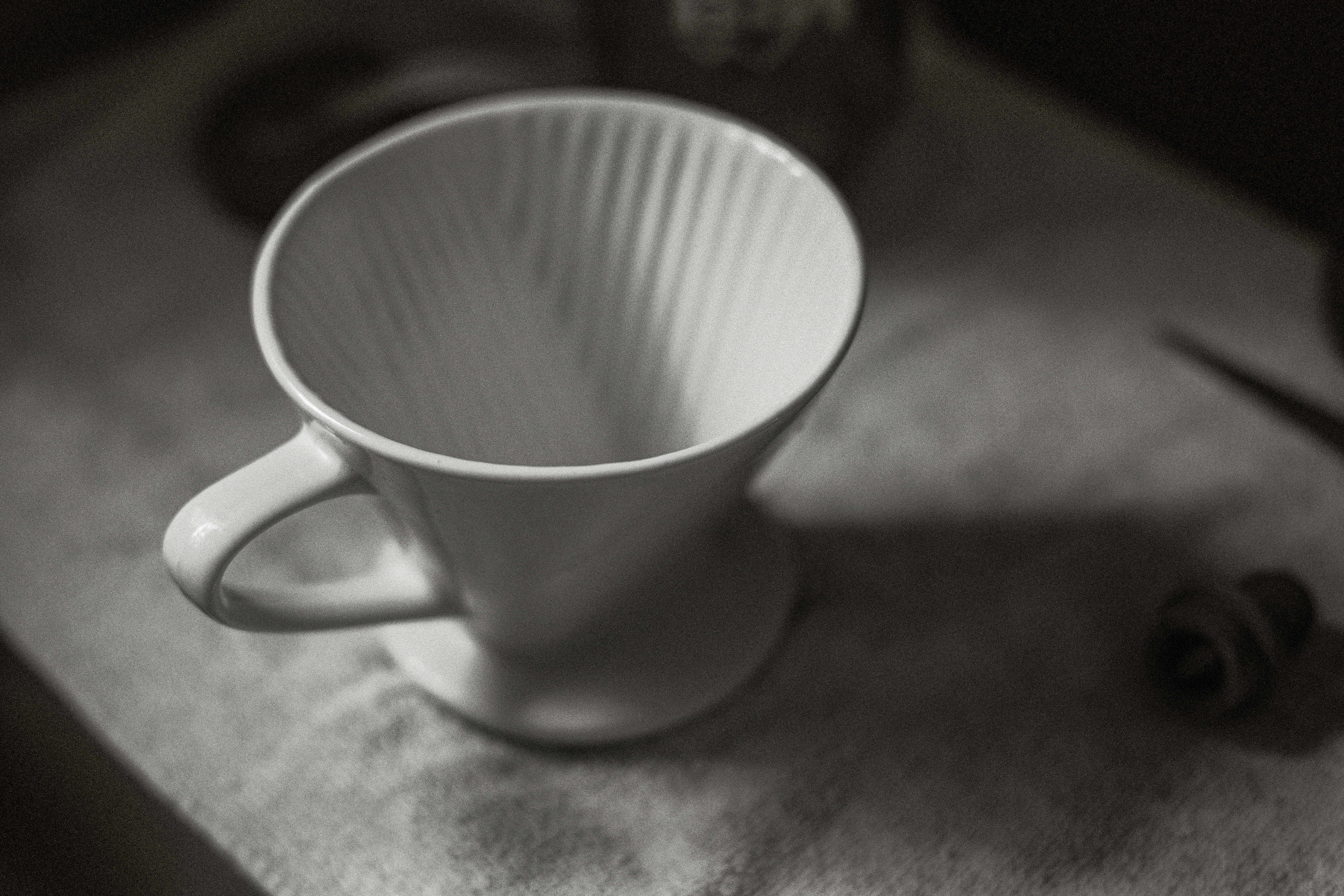
Questa è la mia tazza di caffè preferita di tutti i tempi

C'è qualcosa nella luce che entra nella mia cucina la mattina presto che mi fa venir voglia di fotografare. Le cose che finiscono nel lavandino hanno un aspetto particolarmente bello. Sabato, dopo aver finito il caffè a casa, ho sciacquato la tazza e l'ho messa nel lavandino. Quando l'ho guardato da un'angolazione mi ha parlato e mi sono sentito obbligato a immortalarlo. Ho preso una Lumix S5 con un obiettivo da 58 mm nella parte anteriore e ho scattato alcuni fotogrammi. Quando ho visto i risultati sui miei provini a contatto digitali (non in Capture One) ho capito che dovevo condividere la bellezza del profilo monocromatico di quella fotocamera. Quando guardo la fotografia mi viene voglia di altro caffè. E più divertenti obiettivi manuali con cui giocare. Se non ti piacciono le immagini in bianco e nero, per favore non essere uno stronzo pedante e fare qualche dichiarazione drammatica che sia offensiva. Menziona solo che ti potrebbe piacere che il colore funzioni un po 'meglio. Eh?


An interesting video about Monochrome sensor cameras by one of my favorite BW photographers: https://www.youtube.com/watch?v=GDxHq3Zlbz8

Sunday, April 16, 2023

It's Summer in Austin already. It hit 94° Fahrenheit yesterday. The UV warning was pegged at 10 this afternoon. The smell of sunscreen was wafting through the air. The mannequins are ready for the heat. I knew you'd want more...


 Today it's the Sigma 90mm f2.8 lens that's getting a workout. I have to say it's an often overlooked optic but a very, very good one. For several reasons. Let's get into it.

I have the 90mm Sigma Contemporary i-Series lens chambered for the L mount cameras. There are many things about this lens that endear it to me. It's small and relatively light weight. The metal finish is both good looking and lends itself to very good handling. The lens has an aperture ring and I find that keeps me in tune with the idea of controlling depth of field. Aperture control on the camera blurs away from my consciousness and I find I've gone a while without thinking about it. The lens hood is big and useful and protective AND matches the finish of the lens. I like the 55mm filter size because I have a box filled with expensive 55mm filters that I now have some reason not to throw away. 

I like the lens even more when I use it and am reminded of both how sharp and how optically well behaved it is. Even at its fastest aperture of f2.8. But the feature I realized I liked today was the just about perfect feel and operation of the focusing ring when manually focusing. With practice it's both fast and accurate but best of all it doesn't overshoot like many other FBW lenses do. I like the feel of the focusing ring and after realizing that it would give me both accuracy and tactile happiness I switched everything to manual and spent the day shooting that way. 

Even though I don't have affiliate links and your purchases won't benefit me in the least I think every one of you should rush to your keyboards right now and order one of these. You'll thank me after you've tried it out. And....as you can see....it works in color and monochrome. 

Les mannequins sont une métaphore de la vie moderne à l'ère post-pandémique. Ils ne bougent pas donc ils sont. C'est un truc de Descartes. Mais heureusement pour nous, nous pouvons les contourner et trouver les meilleurs angles. Ce sont les petits trucs qui nous font chier mais aussi les petits trucs qui nous font plaisir. Ne détestez pas les photos de mannequin. Ils sont là pour une raison... Yeah.


An interesting video about Monochrome sensor cameras by one of my favorite BW photographers: https://www.youtube.com/watch?v=GDxHq3Zlbz8

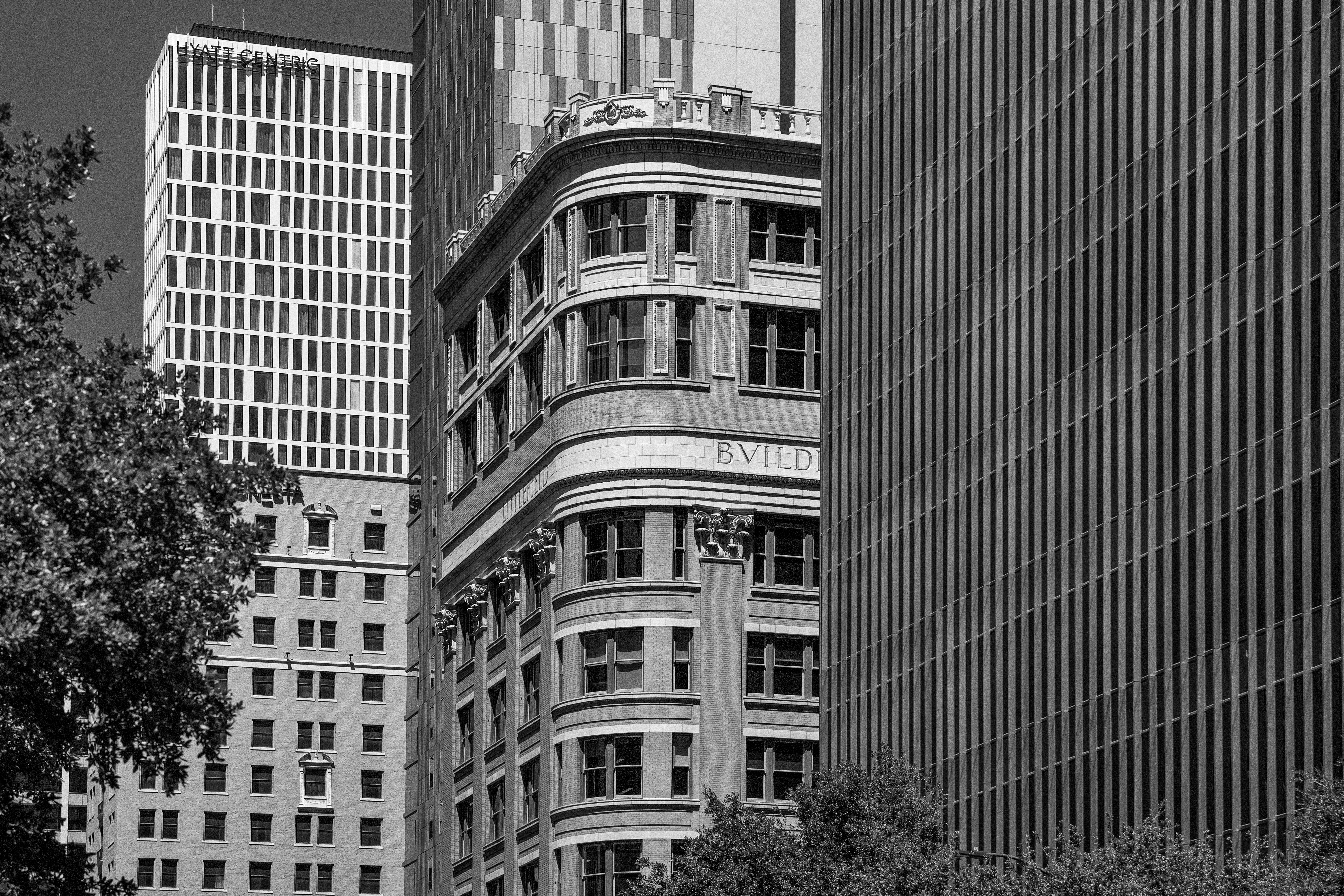
Getting all the angles lined up perfectly. Every line straight and vertical. So parallel it would make Ezra Stoller cry for joy. Or: ways to suck happiness out of sharing photography...

Remnants of the first banking drive through I ever experienced. 


Boring-techture. By demand.

For those not into architectural photography Ezra Stoller was a giant in the field as
far back as the late 1940s. He used an 8x10 view camera to photography buildings and residences of note. He liked all of the vertical lines to be perfect. 

So wonderful that we demand exactly the same geometric constraints here in 2023.

It's as though styles never change. 

 Bonus: An interesting video about Monochrome sensor cameras by one of my favorite BW photographers: https://www.youtube.com/watch?v=GDxHq3Zlbz8

Saturday, April 15, 2023

Saturday morning art. We are toast.


le grille-pain de la classe moyenne. une photo du matin.

I was washing off the breakfast dishes when I turned and looked over my shoulder, out toward the gardens. The most humble of appliances caught my eye and I marveled at the way the soft light of morning wrapped around the metal chassis. Just behind me on the butcher block prep table was a camera set to photograph in monochrome. Or, in the parlance of the ordinary man; black and white. 

I picked the camera up, carefully focused the standard lens on the front and gently tripped the shutter button. Then, placing the camera back on the table, I spent a quiet moment just observing the play of light as a breeze blew through the trees outside.  Trees overburdened with new green leaves, creating the effect of ever-moving illumination. Dancing beams of soft light. Mirrored by the brushed aluminum finish of my favorite kitchen tool. The one I use most often. And with the best results.

If a refrigerator gives us problems I try to be patient; waiting for parts, waiting for service people to arrive. But if the toaster goes awry I'll have it replaced in a day. Some things are critical to modern life. The toaster more so that a phone or a blender. 

While I stood admiring the toaster in all of its glory it dawned on me that it had been a week since I last emptied the crumb tray at the bottom. I did so, being very careful not to drop toasted and re-toasted bread crumbs on the newly washed kitchen floor.

Simple pleasures. Toasting bread. Irish butter. Warm Coffee. A quiet start...


The refrigerator seems to be repaired now...

Taking a break from throwing Molotov cocktails through windows to do an off topic post about swimming.


Jaston Williams, Actor/Dramatist

I have to say right here and now that I should have added strength training to my exercise regimen decades ago. In just the past two months of doing targeted strength training I've seen my swim technique and speed in the water improve by leaps and bounds. Having good muscle strength and core strength goes a long way toward keeping my strokes stable though the entire range of motion. That stability lends more propulsion which creates more speed. The only unwanted side effect is when we train hard in the pool and then lift weights, which causes some muscle soreness the next day. I love the gym I chose. It's super clean, relatively quiet and filled with a mix of people including a big percentage of people over 60. And they are, almost to a person, there to be healthy. Successful people like to be around other successful people. Fit people enjoy hanging out with other fit people.

Today we did some fun sets after a long warm up. We're getting back into more distance swimming with sets of 400s, 300s and 200s interspersed with 50 yard swims of all four strokes. One of the things my favorite coach mentioned to me as a way to improve is to work on my kicking. Improving range of motion and muscle strength allows for more forward propulsion from one's kick and a better kick is instrumental in building great speed in sprints. I practice better form in my kick by "streamlining" on my side and working my kick laterally instead of the usual practice of just grabbing a kick board and changing my body position to compensate for the buoyancy of the kick board. Not using a kick board requires more focus on body position and also breathing.

My favorite competitive lane mate loves to go hard and also likes to shorten rest intervals wherever he can. Typical triathlete mindset. If some yards are good then more yards are better... At the end of each workout, when everyone else is getting out and heading to the locker rooms he usually announces that it's time to do "shooters." In swim parlance this means doing a repeating set of two lengths. The length down is all underwater. No breaths. No above water strokes. And it's tougher than it sounds to go the full length of a 25 meter pool underwater after an hour of speedy and sometimes anaerobic sets. At the end of the underwater length you use the easy swim back to the starting point to recover. Doing five or six of these successfully on a one minute interval is challenging. It might seem easy to hold one's breath for 20-25 seconds at a time but I challenge you do find out how rough it can be. Climb a set of stairs and then, immediately hold your breath and time the duration you can go without taking a breath. Repeat the whole process four times. What was your best effort on holding your breath?

It's easy enough to do repeated underwater lengths if you do them before the workout when you are relaxed and the pre-swim coffee is just kicking in. But that's kind of cheating. At least the way my lane mate sees it. 

A good, post swim breakfast? How about three fried, organic, free range eggs with a sprinkling of sharp, white cheddar cheese on top and a half a cup of fresh blueberries on the side? And a slice of seeded, sprouted whole wheat toast as the foundation. Works for me. 

A blog note. No straight lines in architecture photos! That ship has flown. 

Clarification: I am in no way against a monochrome only camera. In fact, if Leica Store Miami ever gets in more Q2M cameras I intend to snag one. My recent satire was more about the futility of having to do things the hard way. If you didn't like it you don't need to read it. In fact, I'll start labeling satires the way we do "OT" for swimming to save any delicate sensibilities. But don't tell me not to write about the existence of strange ideas about photography on the web. Some balloons just scream to be popped. Like the recently proffered idea that there is a wealth of displeasure on the web with the existence black and white imaging as art., I've never seen it and I scroll around a lot. Or that B&W has always been the province of Art Photography (over color) until just recently. Discounting decades of front and center color work in galleries and museums. An idea or opinion,  presented with a voice of authority, doesn't make it a fact.

Gone Mono. Now going fishing.

I spent yesterday investigating the mono imaging capabilities of a standard Lumix S5 when set to L.Monochrome.D; a higher contrast black and white setting. I also had the EVF set to show only monochrome. It was a fun experiment requiring me to ignore or disregard color in scenes. I allowed the camera to add a little bit of "grain" to the mix. Lumix S5 + Voigtlander 58mm f1.4.


Friday, April 14, 2023

A couple shots from Kirk's Panasonic Lumix S5 Monochrome...


After reading more about the marvelous psychological benefits of using a "real" dedicated monochrome camera instead of trying to fool myself by just setting any old camera into a monochrome mode (profile) I finally saw the light and decided I had to take action if I was to truly understand the complex and nearly overwhelming process of seeing in authentic black and white. And oh did I take action!!!

I got out an Exacto knife, pliers, a few different-sized screw drivers and my handbook on coding custom firmware and went to work modifying a Panasonic S5 I had laying around. I haven't tried this yet with one of my Leicas but if it works out I'm right on that edge...

I tried to tidy up my workspace to keep dust in the throat of the camera to a minimum. I took the lens off the front of the camera and got to work. Getting the tip of the Exacto knife just under the leading edge of the filter stack on top of the sensor was tricky work. It took hours to pull everything up, and lots of trial and error. Getting a grip on the edge of the (hated) Beyer Pattern filter was the hardest part. It's a very thin bit of filter -- but tenacious. That's where the pliers came in quite handy. There were a few rough spots where I unintentionally nicked the actual sensor but those wounds were mostly on the edges so I taped them off with thin pieces of duct tape and eventually, after much trial and error, programmed the camera processor to ignore the last 10% of the edges when making files for final output. 

Reprogramming the camera was more effective after I realized that I needed to start from scratch and totally re-write the operating system, tweak the controllers and then come up with an authentic and aesthetically pleasing mathematic set of formulae for rendering true black and white. Complete with an automatic lifting of shadows and an increase in dynamic range to nearly 16 stops (required to get more wiggle room for highlight recovery). While I was working on the interface between the mechanical systems and the electronics I decided to go a step further and disable any video functions and any software controls for video. Now it appears nowhere on my menus. I also re-wrote the menus so they would display a Comic Sans typeface as I find that more readable and to interfere less with my very precise monochrome thought process/workflow. 

I have to confess that I made a number of unsuccessful attempts on the project over the course of the last several weeks and in the process I had to "sacrifice" a few camera bodies. Well, at last count, five S5 bodies. But they are pretty inexpensive now that they've been replaced by the S5ii. I have succeeded in electrocuting myself several times with lithium camera batteries but the only damage was some burns to my skin, the only damage was some burns to my skin, the only damage was some burns to my skin...

The camera is now semi-functional and I'm in the middle of my beta testing. I have yet to zero in on the milky, soft, super low contrast look that other photographers who are driven to work in monochrome seem to find pleasing. I'm used to seeing a wide range of contrasts in prints from classic photographers so seeing 95% of each frame rendered as a "contrast free" middle gray is....  a bit disturbing. But I'm sure I'll get used to it....over time.....

When I look at modern practitioners who profess to "love" monochrome I am confused that they seem to conflate "monochrome" with only landscapes and indeed, only landscapes bereft of any deep blacks, pure whites or any sort of mid-range contrast. I'll chalk this up to me being a pure tyro in the world of black and white. In the past I have only printed B&W for a very few years and only with a very few formats or film types. I guess I spent from 1978 till about 1996 in my own black and white darkroom and have only printed maybe 10,000+ black and white prints from hand processed black and white negatives over that course of time. I'll admit I have not printed from all negative film formats, just half frame, 35mm, 6x6, 645, 6x9cm, and 4x5. Oh....and some contact prints from 8x10 inch negatives ---- but that sure doesn't make me an expert. Nope. 

I guess when I look back at the several thousand large, double-weight black and white prints lying in cases in my office what I really miss most with digital B&W now is being unable to print the resulting files directly on to silver paper. Stuff like the luscious Ilford Gallerie, Seagull Portrait, and Agfa Portriga. But now that I have more or less finished with the complete make over of an S5 it's only a matter of time until I figure out how to replicate all those meager, past, film experiences onto a modern ink jet printer. Is it really true that all of them distill down the big, juicy files from 12, 14, or 16 bits down to 8 bit files as they write out the results? That's the next thing I need to look at. Building my own 128 bit monochrome printer. Can't go halfsies. 

The image above is of one of my most prized possessions, the heart of my coffee making experiences.

The image below is what confronts me right now. Tree trimmers for the next door neighbors who have succeeded in parking their truck and a pile of fallen branches right across my driveway. Just when I started having a hankering for BBQ somewhere else....

A warning. Cameras are easy to break and I don't recommend doing any 
repairs or modifications yourself. It's likely that you'll have the same 
problems I did on this project: cut up fingers, ruined cameras that at 
one time had such promise. And the scorn of your photographer friends 
who can't seem to understand your insistence on customizing your
cameras.

Satire.
 

Might be cheaper for me just to see a therapist and learn to love my cameras as they are...