Tuesday, April 25, 2023

Tips to live by... ... ..


Much as I love to go see photography exhibits I usually only go to lectures by book authors. They are more interesting. Unless you can find lectures by photographers like Elliott Erwitt.


 I have been in and out of the HRC (Humanities Research Center, also named, The Harry Ransom Center) many, many times. In days of yore I could arrange to take my photography classes from UT to the center to see some of the collected works in their great repository of famous photography. In the 1980s when I taught in the College of Fine Arts we could make reservations to have curators show our students actual, original works by Strand, Steiglitz, HCB, Ansel Adams, Edward Weston and many others which are part of the Gernscheim Collection.

The class sizes I took over were small. Just my teaching assistant and six or eight students at a time. Curators would hand out white, cotton gloves and then we'd get a quick tutorial on how to handle paper prints without crimping them or otherwise marring them. Once educated we would pass around say, a Weston contact print of Peppers so students could see what great prints really looked like. Some prints only got handled by the museum's staff. But we could lean in and really study them in detail.

I remember one image that Henri Cartier-Bresson made of the Pope at the Vatican plaza surrounded by hundreds and hundreds of people. Just tightly packed in around the Holy Father. HCB had a high vantage point. The image was striking. Printed 16x20 inches (which is why student weren't allowed to handle it directly). But, as most of the students pointed out, HCB had missed focusing very precisely on the most important part of the subject. The Pope was rendered soft. Slightly out of focus. But what a powerful object lesson for aspiring photographic artists. Everything doesn't have to be perfect.

I was at the HRC for a lecture by Laura Wilson a month or two ago. And I was there last Thursday for a lecture about Norman Mailer and James Baldwin, given by writer, Darryl Pinckney.

 https://en.wikipedia.org/wiki/Darryl_Pinckney 

The talk was thoughtful and interesting. Afterwards there was a reception with wines and finger foods. And I walked around the first floor of the HRC just looking. That's when I came across this image presented as a transparent film on one of the HRC windows. Part of a classic Dorothea Lange photograph from the FSA. 

In another part of the gallery space was one of the very first photos.... ever.

Altogether it made me happy to live in a city that can be so stimulating for artists. Well, at least for the artists who show up.  

Here is a video my friend Will and I did years ago about the loan of the Magnum Collection to the HRC by Michael Dell.  Fun. And also in "monochrome." 

https://vimeo.com/9830948  Will and I filmed this 13 years ago...

I went out for coffee after swim practice on Saturday. We tried a new coffee shop. We walked around the neighborhood and stumbled into some art produced by children. It was fun!!!


I like to keep up with friends. My friend Anne used to be one of my assistants back in the 1990s. She graduated into being a wedding photographer (not my fault!) and then she realized that a real job with a salary and benefits was preferable and she became a nurse. We check in with each other about once a month. Always over coffee. And our "coffee klatches" are mostly capped with a walk around whatever area we found our coffee in. 

Since Anne and I have such a long history together (and probably since she is a nurse with a master's degree) her first questions always seem to be about my health. I gave her a good report on Saturday and we moved on to other subjects. Mostly about art, music, the declining quality of coffee out in the wild and the need to stay in motion as much as possible. 

We did talk for a moment about film photography and she told me that she's never sold any of her film cameras. The Hasselblad she used for weddings, the Leicas she used for personal work and the Canons she also used for weddings are all still waiting patiently for her in a closet in her house. Well done, considering the resurgent popularity of top line film gear. 

After having coffee at the very crowded packed Radio Coffee house and gardens we decided to ramble around a neighborhood, just adjacent, that neither of us was at all familiar with. In a few blocks we stumbled into a beautifully landscaped little collection of modest mid-century houses that had been transformed into a private, primary school called, "Habibi's Hutch."  We had both heard of the school for years. They are known to be very "art forward" with their students and relatively without borders when it comes to each individual student's curriculum. And boy oh boy, it's apparent that art class is a top priority for many there. 

I had a blast walking along the fence line making photographs of the student art hanging on the fence wires. The colors were vibrant and saturated with little help from me or my post processing. I was using the Leica SL2 camera and the Voigtlander 40mm. I seem to have a crush on that lens this week. 

I can hardly wait to go back again and photograph more of the art work. I didn't want to truncate the walk on Saturday. But the universe is pretty good at rewarding folks who take the time to get out and walk through the world. Especially if they also bring along their cameras. 

Be sure to click on the images and make them big. They are fun. Children's art always reminds me that not being too serious all the time makes being creative a lot easier!!! B thinks the secret of any creative success I've had is my immaturity. In fact, one of my coaches told me he thinks I have: M.D.D. = Maturity Deficit Disorder. This, he believes is why I like to swim fast, play around a bit at practice and smile more than I frown. Maybe he's right. Maybe more people should catch it. I wonder if immaturity is contagious? I hope so. There are way too many people walking around with a stick up their butts....  (four ellipses alert!!!)....


I was walking around Austin with a 40mm lens on my camera. I found these two images and thought they were funny. Unusual. One doesn't expect to find trenches in a building on Congress Ave. Just a block or two from the Capitol.


I guess it's a historic building so whoever owns it can't just tear it down on a whim. But it's pretty well place real estate so at a certain point an investor sometimes just punts. I can't imagine what the trenches are for but then I am not a structural engineer. 

I can't say that this 40mm lens did a better or worse job than any other 40mm would have since it's not a collection of photographs that lend themselves to "showing off." 

But, in my own mind, the real message from the universe to me on finding this yesterday was, "See? See how much changes from week to week? If you didn't visit you wouldn't see the changes."

I am starting to wonder just how many coats of paint were on these walls before construction/deconstruction started....

(I have officially decided that my trademark ellipses, which I use often and mostly incorrectly, will now have four dots instead of the usual three. It's my way of pushing back on the universe....just a little bit).


Monday, April 24, 2023

Voigtlander's Interesting Selection of Nikon AIs mount lenses. Is it a good idea to buy a lens with an "antiquated" mount?


A sample from the Voightlander 58mm f1.4.

It was earlier this year that my friend, Paul, brought this particular line of Voigtlander lenses to my attention. While most photographers think of Voigtlander lenses being produced mostly for M mount camera I was surprised to see that the company had engineered four different lenses that come in a Nikon F mount. After borrowing a 58mm f1.4 from Paul I got really interested and started reading more and more. 

Voigtlander lenses are produced by the same manufacturer in Japan which makes most of the current Zeiss branded lenses; and they have since the days of the Contax SLR cameras. I already own a Zeiss 50mm f1.4 lens which I like very much (lots of "character" wide open) so I was very open to seeing what the company was doing in that strange Nikon space. 

Quick note: A photographer friend named David, who is actually more of a feature film director/producer, probably changes cameras even more often than I do. A month ago I ran into him at a party and he was carrying around one of the "Ghost" finished Leica Q2s. A while back he was the first photographer I knew who splashed out for the Leica S medium format camera and a handful of Leica medium format lenses. His camera turnover is prodigious. Don't worry! He can afford it. 

Anyway, I was walking around taking photos in our downtown area on Friday and I saw him through a window, sitting in a café. I walked in to say, "hello." Next to him on the table was a nice and minty copy of a vintage, Nikon F4 film camera. I asked. He just came back from Tokyo where he picked up the pristinely preserved copy for about $120. Knowing he wouldn't keep it for long I made him promise, upon pain of social censure, not to sell it to anyone but me. It would be the perfect film vehicle for these Voigtlander lenses. And so it goes....

Back to the main topic: Voigtlander currently offers four different lenses in Nikon dress. These are a 90mm f2.8, the 58mm f1.4, the (delicious) 40mm f2.0 and a 28mm f2.8. I've learned that several of these lenses have existed as Nikon mount lenses for years but all have been recently updated to look very much like the pre-AI Nikkor lenses from the late 1960s and early 1970s. Big, husky, deeply scalloped focusing rings, very Nikon-ish aperture rings complete with the little "ears" to engage pre-AI camera meters and the usual Nikon lens mount, complete with electrical contacts with which to enable communication with more modern camera bodies. They are delightful to look at if you worked with Nikon's older cameras for any length of time. They are more stout than the M series lenses but if you are going to mount them to rugged Leica SL bodies or big Panasonic S1 bodies that doesn't rise to the level of off putting. 

The beauty of buying lenses in this mount is that because of the long distance required from the lens to the sensor they can be mounted on just about any mirrorless camera on the market for which an adapter ring is available. They can be used on Nikon's newest Z cameras and when using a Nikon Z adapter they retain the ability to transfer data about aperture settings, max. aperture, etc. and to also enable a guided manual focusing. You can put them on Sony cameras. You can buy old Nikon film or DSLR cameras and use them with a certain nostalgic glee. I'm actually considering tracking down a Nikon Df just to use with these lenses, and a few other Nikon F mount lenses I've held on to. So, very, very much a chameleon family of lenses. 

As I mentioned, I have the 58mm f1.4 and the 40mm f2.0. I can't justify buying the 90mm as I have and enjoy the 90mm Sigma lens but I am trying to consider whether or not to buy the 28mm. The lens designs are modern, dating back to around 2006-2007 for most. They are all very good and use modern optical components such as high refractive elements and some aspheric elements as well. They are not as clinically perfect as some even more modern lenses but I think that's fine for the kind of "found art" shooting I mostly do with them. They are certainly more than adequate and, being completely manual, they are more fun to shoot with. At least for me. 

I would be most interested to hear from anyone who has and is shooting with the 28mm. And, if you'd like to share experiences about the other three lenses I am certain there are a number of readers here who would like to hear about them. Fire away in the comments. 

Right now I'm going to put the 40mm on the front of an SL2 and spend some more time getting to know that lens. That's all for now.

Sorry it's taken me so long to get the comments moderated...  Such a Herculean task! 

Sunday, April 23, 2023

OT: Your focus determines your reality. Concentrate on the here and now. (philosophy stolen directly from Star Wars).


The world is constantly shifting, changing and mutating. And there are three aspects of psychology that drive anxiety or depression. Each seems to be made worse by the velocity of change.  One is indecision, being unable to act. One is ambiguity, being unable to see effective differences between choices. Or even being able to see choices. And the final driver of feeling glum or distraught and nervous is loneliness. It is possible to develop solutions to all three. But you have to work on it. 

I have a few favorite ways of dealing with modern life. For things like the dastardly (but now tamed) refrigerator or the downed branches from the ice storm, or a door ding on my car from a parking lot, I always try to stop and say: "Will this matter a year from now? A month from now? A week from now?"  And will I even remember it? That helps. 

If a thing (camera, car, window, light, etc.) is lost, stolen or damaged I get to swear out loud for ten seconds and then I remind myself that none of this will really affect the core parts of my life. None of this will put me in existential danger. None of this is irreplaceable. I grab a check book or a credit card and replace the important things but I also view loss as a new offering of choice from the universe, letting me gracefully bow out of owning too much. I don't have to replace everything that goes missing.

When it comes to making decisions I tend to research very quickly, confer with experts and then make quick decisions. I don't mull over important stuff for long. When my dad needed to go into memory care I asked his team of doctors for their recommendation for the best facility in town. When I saw a consensus I immediately moved forward. When a friend had center chest pains, too much fatigue and a tight jaw I didn't stop to debate it or research it or worry about whether someone's insurance would cover it. I called 911. He did have an M.I. He got seen within 30 minutes and enjoyed a good, fast recovery. Indecision in a situation like that is life threatening. But most of the time indecision is just a waste of time. When my dermatologist found a cancerous spot on my cheek we were heading toward Moh's surgery as fast as we could schedule it. Procrastination is more expensive, I think, than not making the absolute best decision.

But as my spouse might tell you, if I go out to look at new cars in the morning I'm generally driving home in my choice that afternoon. 

I'lll never be as wealthy as friends of mine who worked early on at Dell. Or the one's who've clocked 20+ years at Apple. But it's folly to compare oneself with a tiny outlier cohort; especially if you already have more than you really need. I can be as happy driving an inexpensive car as I can be driving a Bentley or a Maserati ---- as long as there's something good playing on the sound system. After swim practice one day I was complaining to a well $$$ compensated friend about how hard it was to make good airline reservations to secondary market cities. He looked at me for a second, almost curiously, and asked, "You still fly commercial?" I reminded myself that I should consider myself fortunate just to be able to go wherever I want. Even if it means flying at the back of coach/economy. In photographic terms it means I'd be just as happy photographing with an old Nikon D700 as I am shooting with a Leica.

So, when it comes to photography I think it's a gift to be able to "see" a shot quickly. Intuit a good composition at speed and to be decisive enough to get what you want in that very moment. To take decisive action. It's the same when it comes to approaching strangers in the street to ask if they'll stand still for a portrait. You have to be decisive and once you've made your decision you need to immediately act upon it. March right in. Smile and sell your desire to portray the stranger and then get it done. Procrastination will rob you of your strength and courage.  And opportunity.

Ambiguity is harder. You don't know what you don't know and you don't always have a path to figuring things out. But you can always control how you'll respond to ambiguity. You can ask for clarity. You can do your due diligence and research. You can get clarity from a mentor or an expert. But you can also decide that there is nothing that needs to be done in the moment and you can dismiss the need to have clarity and move on to solving something else more concrete. That gives you control too.

One thing that seems to trump situations of ambiguity is to have a firm set of rules you follow that are more or less about ethics and morality. Also, taking "feelings" out of an equation and looking at pure facts is so helpful. For example, you may love the house you bought with your spouse 25 years ago but you might do better now in a place that's closer to more friends and family. Not so isolated. But the nostalgia of place could be hampering your decision to move on. Separating the feelings from the facts of your situation is enormously helpful. Selling the old house might mean you can garner more financial security by putting the proceeds into savings, finding a smaller house or apartment closer to friends and family, and start harvesting the benefits of an improved social network. But the ambiguity or overlay of sentiment clouds the decision making and leads one to think of the situation as one with no right answers. Or nothing but bad choices when that's almost never the case.

Finally, the core of anxiety and depression is loneliness. It's interesting to think about as we age. B has been down in San Antonio for weeks at a time this Spring, taking care of her mom. A fall led to a bout in the hospital and some time in skilled nursing care. B is working with her siblings to help their mom safely manage living back in her home. It's the right thing to do for her mom. But it means I'm here by myself for the first time in my long adult life. I thought loneliness would be difficult to deal with. But it seems there is a network here of my friends which has instantly rallied with dinner invitations, coffee drinking dates, happy hours, long walks together and, of course swimming. 

I missed a couple of days in a row of swim practice as I waited for someone to nurse my refrigerator back to health, and as I added more strength training (a lone pursuit).  My mail box and my phone were jammed with messages demanding to know if I was alright. If I needed anything. If they could help. When I showed up for the next workout one of the coaches asked me where I'd been. Was everything alright? Was there anything he could help with?

This, the social network, is the antidote to encroaching loneliness and as I age I find that you actually have to make the effort to keep engaged. It's a reciprocal practice. And a good one to get into. 

When I have the chores all done and my work for the day complete I find that it's also very, very restorative to take a camera and go out walking. Just about anywhere works. And just about any camera works. Being out in fresh air and moving your body is medicinal, especially for one's mental health. Smiling at strangers. Saying "hello." Marveling at so many things that have changed in the landscape from a week ago. And the delightful thing, at least for me, is that walking with a camera is non-competitive and costs nothing. Well, nothing but the occasional cup of coffee. Or a donation for that guy who plays the drums on Congress Avenue with his beautiful little dog named, Nana. 

You can play life two ways. You can be grateful for everything you have, and appreciate all the people in your life or......you can be in constant despair. I know for sure which one is the most fun. For more on the second path go find a copy of the "Winnie The Pooh" and review the sections about Eeyore. Who really would like to be Eeyore when being Pooh seems so much more fun?

I can be sad that I can't lift 200 pounds over my head. But I'm happy I can lift 100 pounds for now. I may never get to 200 but I most likely don't need to. I will most likely not get that cover shot on Rolling Stone Magazine but I also most likely will always enjoy taking photographs, if only just for myself. 

Vacations? I've been on one long, happy, relaxing, fun vacation almost every day since I graduated from UT. And maybe for years before then as well. Being happy in the moment and grateful in the moment is the real secret. And, for the most part, the best stuff is free. All it takes for me to smile and be happy is to see a warm look of love in B's eyes. Then, I am rich and fulfilled beyond compare. 

Just a few thoughts on a Sunday morning. Damn....it's beautiful outside. 

Now it seems like good marketing to broadcast that your truck is a hybrid. 
But a decade or two from now this will be an oddity of the past as all trucks
will most likely be electric. Or maybe nuclear powered. Who knows?


I was looking at WotanCraft camera bags the other day. They look so
canvas-y and rugged. I wanted one but they don't have a USA dealer and
I'd have to order one online and deal with customs. But why would I when this bag above is so great?

finally. I've managed it. I kept both eyes open!!!

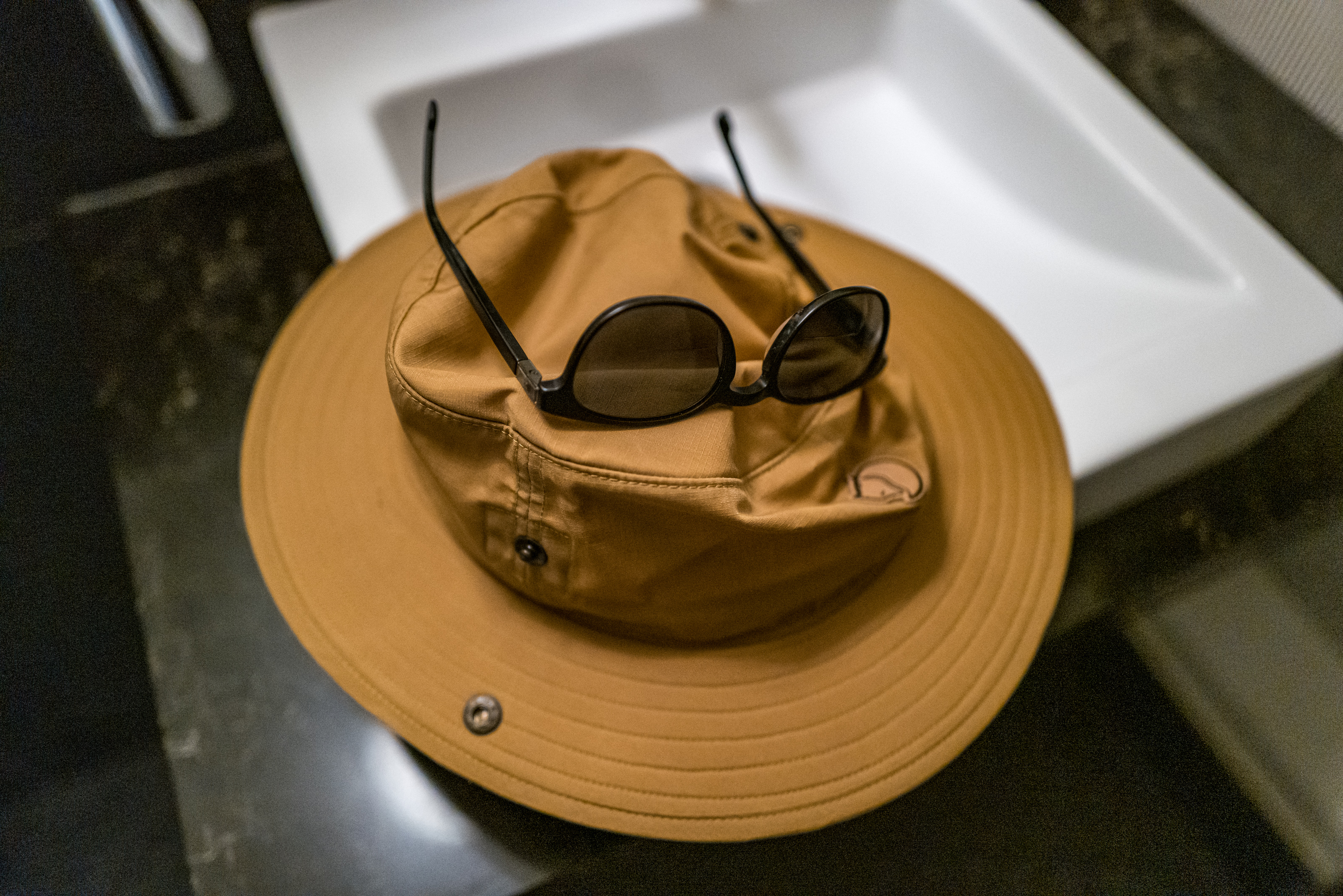
Introducing: My New Hat. Summer is rushing towards us...

I'm renaming my camera: The Long Dynamic Ranger. 

Just go be happy and stop whining. Something my high school coach probably said.

More than once. 

Just how well does the Leica Q2 perform in its macro mode? And just how good is its noise performance?

Evening at Will's house. His separate studio/office in the background.
Mark checking messages in the mid-ground. A glass recently emptied of 
Champagne in the foreground.

When I purchased a Q2 I was not looking at it's close focusing performance and I was really less interested in how it handled noise at ISO 4000 and above than I was in how well it handled when operating it, and the overall quality of its files for general use. But after having used it for months now I find myself taking it everywhere. And using more of its other features...

I had the Q2 with me when I met novelist and essayist, Daniel Pinkney, on Friday evening at the Humanities Research Center at UT. I had it with me this morning when I went to buy fresh coffee beans at Trianon coffee, and it waited patiently for me in the car when I went to workout at the gym last evening. The camera is small and unobtrusive but can it perform? Short answer? Hell yeah. May be the perfect "dinner party" camera as well...

There are three things I didn't really explore in the first few months of its residence here. One is the macro mode. One is the ISO performance. And third is the camera's ability to focus well via the manual focusing mode. Which feels just like a well done SLR of old.

I want to write about the first two items here. Starting with macro. This camera makes shooting closer easy. You are still limited to the angle of view of the 28mm lens but with the simple twist of a ring closest to the camera's body you are able to extend focusing, complete with AF, a lot. The image just below shows the closest focus I can get on a bowl of peppers and fresh tomatoes. It's enough magnification to get in pretty tight. It's not a miracle setting and it's not going to give my Sigma 70mm Macro Art lens a run for its money but it gets you closer, cutting the full frame image in half. By which I mean it magnifies by about 50% more. It won't replace your dedicated macro rigs but it is very useful when you realize that you are working with a nearly 50 megapixel image which can be cropped without undo anxiety over image quality. And I mean cropped a great deal. 

This is as close as I could get to the flowers with the macro engaged. 
It's still a wide angle lens. You can see Mary's arm over in the right bottom 
corner. But the detail crop below showed me just how sharp the lens can be right on
the actual focused plane.


The photos of the tomatoes just above and just below are both from the same frame. The bottom frame is a 100% crop of the photo. There are two things of note. This was taken after dark in a dim kitchen and required a high ISO (ISO 6400) and a steady camera. The resulting file was a bit noisy. I expected that. But I ran it through the A.I. DeNoise noise reduction (new feature) in Lightroom to get a fairly noise free photo. I cropped in below to show off the wonderful, fine detail on the leaves of the tomato plant. The ones that are in the plane of focus. Pretty amazing detail given the slow shutter speed, of the handheld camera, and the high ISO which generally robs detail. And kudos to the in lens image stabilization. It just works.


I don't know if it's really visible but on close examination, in the 100% mag. frame above, I see some chromatic and luminance noise in the black area between the front two tomatoes. But given the 6400 ISO setting I think it's an excellent performance. I'm happy with it. 

Yesterday evening I posted a casual, black and white portrait of Will in a blog. I made the image into a monochrome. I thought you might want to see where I started from. What the color image looked like when it existed in LRC as a raw file. I am not AT ALL asking you to pick favorites. There are things about both that are good. I'm not looking for a critique or scoring. I think after 40+ years of shooting, printing and publishing I know what I'm looking for. I just wanted you to see "under the hood" so to speak. 
Will in color.

I'm still finding out just how much the Q2 can do. If I ever retire (and why would I?) the idea of just owning a Q2 and maybe a companion Q2M seems awfully tempting. And carefree. Pondering the future is always a bit dangerous.


Saturday, April 22, 2023

A casual portrait of my friend, Will. Why I always take my camera to dinner parties.


Will. 

My friend Will, and his wonderful wife Mary, love to entertain at their home. And I understand why. They are just so good at it. Knowing that my better half is out of town this weekend they invited me and another good friend over for an extended happy hour with lots of fun food and beverages. They've invited me over often this Spring and we've been lucky with the weather so we get to sit outside in the middle of their vast garden, under strings of lights. 

I am rarely without a camera and Will, a photographer of fame and merit, is more than willing to stop for a quick portrait. On Friday evening I was carrying my Q2 around with me and channeling some of the style I've seen from UK photographer Paul Reid. (look him up on YouTube).

Will was sitting at a counter facing into his kitchen and I liked the way the light flowed down his face. I asked him to lean forward for a few frames and fired off five or six shots with the camera set to f1.7 while using 1/60th of a second and auto-ISO. Some of my best portraits come from times when we are all happily socializing. And my friends are quite used to me having a camera around.

This photo started life as a color raw file and I did most of my meager post processing work in the color space before using a Lightroom Preset to convert the image to black and white. Or as we're now supposed to say, "monochrome." 

The camera has built-in image stabilization and a wonderful lens. The lens goes a long way toward making me appear to be a better photographer than I otherwise might be. 

Will has the same issue I do. He's always the one taking photographs of family and friends but rarely gets photographed himself. Sometimes the gift of an interesting portrait is of great value to the subject's family. And it's fun. I sent the image along to Mary and she really liked it. 

Dinner parties are such a great event to photograph. Everyone is mostly happy and calm. Friends you've had for decades and decades are completely open to you exercising your craft. And the Q2 is weather resistant which is great for those times when someone opening a bottle of Champagne gets too carried away with the drama of the "Pop" and gets a few effervescent splashes on the camera. 

The Q2 is helping to change my mind. To open it up to the potential of portraits made with wider and wider angle lenses. 

Will is a  wonderful subject and hanging out with him and his crew is a really keen way to spend a Friday evening in the Spring time. I'm so lucky to have so many close and long friendships. Makes life even better.
 

Friday, April 21, 2023

ATTENTION Austin Photographers. Eeyore's Birthday Party is one week and one day away. Mark your calendars for April 29th at Pease Park!

Sony a850 camera. Minolta 28-85mm zoom lens.

It's that wonderful time of the year again when we get together at Zilker Park, celebrate Eeyore's Birthday Party and raise money for local charities. With cancellations in 2020 and 2021 there is a lot of pent up demand to jump into drum circles, dance like no one is watching, smoke dope on the hillside, dress like fairies and Pooh characters and generally have a wonderful time. 

I suggest that this is a wonderful event for photographers as well. If you really want to immerse yourself in the fun and visual wildness you might want to leave those creepy, long zoom lenses at home and practice your craft as you would if you became a street photographer. 

The prime time for Eeyore's is always from around one p.m. till dusk. No glass bottles. No weapons. No bad attitudes. A happy gathering. Started by a UT English professor named, Joe Slate, way back in the mists of time. Now an event.

A quick note on photography blogging.


I've got a few ethical questions about blogging about the photography space. Not easy ones like: "should I have affiliate links?" but more along the lines of, "Just how much personal information should a blogger be sharing?" "How much personal information do audiences really want?" "How close to the primary/core area of interest should bloggers stay?" Lately I shared way too much information about my infernal refrigerator. (It's now working as it should and has been for about ten days now.... recompense for expenses  received, warranty extended). And I never mind sharing stuff like how the swimming is going. Or what I'm planning for upcoming vacations. Even something along the lines of fun and positive, but non-photographic events in day to day life. Ben's graduation from college. B's retirement.

But I feel queasy posting about childhood traumas, colossal personal failures, failed relationships, abject  fears of mortality and decay, or non-business related setbacks. I'm also not a fan of family histories or "might have beens." And I definitely would never want to share my financial information or net worth online. For any number of good reasons.

But here's the deal, if we read the same blogs for years at a time we develop a sense of community, and a penchant  sharing, feedback and a sense of mutual give and take. If someone like myself is willing to put life stuff out there in writing it should be assumed that, as long as comments are enabled, I'm willing to accept feedback, praise and even reproach (or gentle course correction) from my readers. I don't always agree with or like the feedback I get from tilling the soil of blogging but I should expect to get it. If it's ad hominem attack material I have the option of deleting a sour comment but generally, even when a reader disagrees with me such as the recent chiding I got for converging architectural parallels I post it argue about it and then, sometimes (as in the case of Mr. Benson's comment) realize that maybe the other guy is right. And that I've over-reacted.

With photographic content this is easier. You can argue fine points about photography for hours and mostly walk away unscathed. But when we start dredging up regrets, painful episodes in life (see my swim post from earlier today) and ruminate over material that's purely indicative of something going wrong or trending in the wrong direction, it's harder for me to see where the lines are drawn between jumping in and commenting or sitting on the sidelines. Always quick to keep an eye out for entropy and dystopia. 
Some of my readers seem to think there is a code for writers which disallows us to rebut bad ideas or awkward philosophies. I don't agree. I think we have the same rights of critique and criticism as everyone else. But, again, I may be wrong. But so much of life is beyond binary. It's endless shades of gray. Or grey. 

I'm pretty comfortable with my knowledge base when it comes to most stuff that's photographic in nature. And I think I have long since learned to navigate doing business in a profitable way. When it comes to close personal relationships I try to stay relentlessly positive.  I have only to post a celebratory note about celebrating our 38th wedding anniversary to bring a smile to my own face. But where I get in to trouble is when I assume that all other people will make smart decisions on their own behalf. When I assume that people want to be happy. When I assume that some attitudes and habits are symptoms of misplaced martyr syndromes. Or pathways to depression. But I'm only seeing the top layer, not the whole cake.

If content creators were physical friends instead of virtual friends I would have no hesitation in sitting them down and trying to help. And I would expect the same in return. But with web friends, other than having read and commented on common material we have no other common, personal touchstones, no real bonds and no real understanding of the underlying person. We can conjecture, read into the material in a sort of "between the lines" manner but we might be wrong much more often than we are right. And our ability to change someone else is iffy to negligible. 

As I look over the 5,000+ blog posts I've shared I find that this one itself is so far afield from the subject matter that this channel is supposed to be about. I wonder if most of the long term photo bloggers have so exhausted our primary subject matter that we are now either into endless repetition or, on the other hand, the airing of our grievances with the bad hands we think we've been dealt in life, or just the unexamined but desperate desire to cling to some vestige of relevance. I know the last part is true, in some sense, for me. 

It's disquieting. This misplaced sense of wanting everything to go back to what it was. Wanting blogs to be as fresh as the day one discovered them for the first time. Almost desperately wanting them to be about what they advertise. When I feel like this I should learn to just turn off the lights in the office and go for a walk. No one asked my opinion anyway.


I just took two online surveys. It's interesting to try to divine what the companies are searching for. Adobe and Leica...


 Having worked with surveys fairly frequently when I was at advertising agencies it's always very interesting to me to actually be part of a survey. You know from the outset that the company doing the survey is looking for direction or validation from their targeted customers. This morning it was both Leica and Adobe reaching out. And in both contacts it was explained that they identified me as a registered customer of their products.

I could see in short order what the idea behind Leica's survey was. There were no in depth questions about cameras; only about lenses. And what they seemed to be trying to understand was why people choose the lenses they do and how much size, prize, weight, optical quality and innovative features make a difference. But what they were really trying to get at --- in my opinion --- was: are we still in a consumer environment in which there is a good market for lenses that: Are of the highest optical quality possible, regardless of any other parameter. Or, Do actual Leica buyers and users want a different combination of features including smaller, lighter and less expensive version of lenses that already exist across focal length ranges? Another question popped up in which Leica asked if made in Japan versus made in Germany made a difference to buyers. They had a graphic showing two identically spec'd lenses but one labeled "made in Japan" and the  other labeled "made in Germany". They also showed the presumptive prices. The German-made version at around $6000 and the Japanese version at around $3200.

What I'm seeing, reading between the lines, is a decision making process about having more and more Leica lenses made outside of Germany versus a deterioration of the brand as a result. I expect we'll see a lot more "design collaborations" between Leica, Panasonic and Sigma. And some jockeying on pricing and imputed benefits selective to the brand. 

I'm predicting, based on the long survey, that we'll see two lines of SL lenses in the near future. One line will be the bigger, heavier and more premium products which will most likely carry the label "APO" and a smaller, lighter and less costly version of each focal length labeled, "APSH." 

Adobe's survey was more rambling but it was mostly focused on the Lightroom series of apps. I use the LRC or Lightroom Classic almost exclusively and I'm never really interested in the mobile variants at all. The idea of color correcting and retouching, or cataloging images on my phone seem silly and a waste of time to me. 

But at the core, after qualifying the responder, the real impetus of the study seemed to be about finding out two things. Firstly, what the market wants in terms of features that are made possible with A.I. and M.L. Do we want to use text to use features? For example, do we want to be able to type, "Make Sky Darker" and then have the program respond and complete the functions required? And, do we want the program, like a super sophisticated "Spell Check" to anticipate or recommend creative decisions to us in order to improve our images. As in, "Hey buddy, look what I've done here with Naomi's face to make her look "better." "Cool, yeah?" Well, maybe not. But Adobe seems to be trying to find out where people's comfort zones with new tech are and where it's felt they might be stepping over a line.

The second thing they want to find out is exactly where all this created content ends up. Which social media outlets mostly. No questions whatsoever about printing or sharing in print but plenty of questions about how we share our images electronically. And whether we want them to make it easier and easier to go directly from Lightroom to our favorite social media outlet. I think it's all easy enough right now but apparently some folks want to just say outlaid, "Hey Lightroom, toss this image over onto my account at Pinterest!" and then go back to watching TV.

My one piece of advice for Adobe would just be to make image cataloging and storage easier. And my one piece of advice to Leica was to get moving on making me a smaller, slower short standard Leica branded zoom lens. Something like a 35-85mm f4.0 Vario lens. Just wide enough to shoot casually in the street and just long enough to make a flattering portrait. Why f4.0? Well, to make it smaller, lighter, cheaper and equally good optically. Where the rubber meets the road. 

Will they listen? Who knows? Everyone wants everything these days. The on suggestion Leica did ask for was whether or not to build a 35mm f0.95 M lens. That stopped me short. Were they actually considering tooling up and making such a weird optic? Or are they now at the point where they might be reconsidering re-branding a popular Chinese product? That would not be good for the ole snob appeal. 

But kudos to both companies for actually reaching out to discover what actual customers are thinking about. The info might build a better model for further inflaming desire.


That weird space between 35mms and 50mms. A focal length in the middle.


 But first, an off topic personal ramble. When I was in high school my friend, David and I were both on the swim team and we hung out together because neither of us was part of any discernible outlier cohort. We were resolutely normal. Middle of the median. One Saturday morning our swim coach, who had been an amazing college swimmer, and was the older brother of an equally amazing distance swimmer on our team, waited for us to meet him at a pool in downtown San Antonio for an all city, invitational swim meet. We'd be swimming against all the other high school teams in our area. This was back in the day when high school swimmers were expected to get to events under their own steam so David and I "borrowed" his older brother's Chevy Malibu SS396 automobile, grabbed our swim gear and headed on toward downtown. 

When I say swim gear I mean each of us had one pair of small, uncomfortable goggles which, for some reason, were referred to as "Swedish Racing Googles." Maybe it's because they came from Sweden. We didn't really care, we were just happy to have goggles. We'd both swum all through childhood without any goggles at all. Not having bright red eyes at the end of every swim practice seemed like such a luxury at the time. 

The rest of our gear consisted of one racing swim suit and one towel per person. Everyone on the team wore Speedos. There wasn't much else back then. They were tiny little skin tight nylon racing suits that left little to the imagination. But I guess that's why we always had a pair of baggy pants to pull on after our races. Just to cover up. Pants we didn't mind getting wet and saturated with chlorine. Again and again.

We were more or less model students and well disciplined athletes.  All of the swimmers. We both maintained high grade point averages, never "underachieved" and always tried to do our best. Even when we weren't feeling 100%. The idea of not at least trying to place in a race was absolutely foreign and distasteful to us on a number of levels. Pretty much everybody on the team had the same mindset; the same ability to establish goals and work toward them. A large percentage of our high school swimmers went on to swim for their various colleges and a surprising number became doctors, lawyers, engineers and tenured academics. The rest just went on to become CEOs and company owners. Most benefited from the discipline they learned and developed through two swim practices per day, the first at 5:30 a.m., Monday through Friday and the second practice at the last period of the school day --- stretching out for two or more hours. Oh, and yeah, we also had swim practice on Saturday mornings. All were mandatory if you wanted to swim on the team. 

In the years that I swam for our high school we won state twice. We didn't fool around. We were too busy with A.P. courses in math, science, English, etc. We got into the pool. Got our work done and then went straight home to study. Once in a while we'd take a Saturday afternoon off --- just to relax. But the bottom line is that we learned how to work hard, set and meet goals. It was great training for getting through STEM courses at the University (and here in Austin we say, "THE" University because UT is the greatest school of higher education in all of Texas. We would never have infantilized our alma mater by referring to it as "Uni." 

I guess the real reason we didn't slack or goof off in competitions  was that swim meets were scored with a system of points for each place. Each of the top six finishers got points for the team. So, even if you weren't first, second or third you tried your best to place so the team could win, overall, with high points. That's part of competitive team sports. Every place counts. Every race counts. And the racing experience you got was cumulative. Plus, winning feels good.

Anyway, David and I were heading downtown and we realized we were starving. We'd been swimming hard all week and we had both left our houses without much of a breakfast. We drove by a donut shop, looked at each other and then pulled a u-turn and slipped into a parking space right by the front door. We were reactive back then. We saw donuts and we reacted. We each bought something like a half dozen donuts. And not just simple glazed ones but also examples of creme filled and jelly filled. We also each bought a quart of milk to wash the donuts down with. I guess we thought we could digest these little hockey pucks before it was time for our events.... But we gobbled them down like.....donuts. 

The pool we were swimming at that morning was at the Lone Star Brewery just south of downtown in San Antonio, Texas. The pool itself, a full 50 meters long and ten lanes across, was built into the side of a manmade lake. So, concrete swim walls with chlorinated water on one side (regular, regulation pool with lane lines, etc.) and an actual lake just on the other side of three walls. 

We staggered into the swim area a bit unsettled from the massive sugar high and we stumbled right into our coach. He was tall and had amazingly wide shoulders. He also had a temper. Apparently we were late. Our events were coming right up. The only thing he was happy about in the moment was not having to scratch my event. It was set to go in about five minutes. I ran to the locker room to change into my suit. David and I had missed warmup. I'd never swum in this pool before. My stomach was filled with white flour donuts and endless sugar. Plus some weird donut creme. And milk. Lots of milk. A bad combination for an upcoming race...

I made it out to the deck as the first heat of our event got onto the blocks to race. I was in the third heat. The last heat. The fast heat. And it came up quickly. The race was 100 meters, long course, of butterfly. I was in lane five. I was less worried about finishing well than I was about losing my overindulgence of donuts in the middle of the pool. That would be embarrassing. And my coach of many years would demand to know "what the hell happened?" 

A few minutes later our heat was called. We stood on the blocks. The starter called out: "Take your marks." And when we all settled he fired the starting pistol and off we went. I tried to ignore my gastric distress. We hit the first wall and everything was going okay. The last fifty yards though were agonizing. I got touched out at the finish by three other swimmers (eight per heat) and one of the timers told me my time. I don't remember the exact number but I'm pretty sure it was three or four seconds off my best time for the season. I knew my coach would be pissed. But at that moment there were more pressing things to attend to. I yanked myself out of the water and ran as fast as I could to the restrooms where I launched/divulged/out-boarded/surrendered the contents of my stomach. Again, very embarrassing. But in that moment I learned the importance of planning, scheduling and executing on those plans. And not doing things that are self-defeating. I was ashamed to have let down my team by not placing higher. I was crestfallen at having missed hitting my race goal by so many seconds. And it was tough to make eye contact with my coach. 

One of my rivals that day was from MacAuthor High School. His name was Bob Davis. He kicked my butt. Many decades later I was hired to photograph the CEO of insurance and banking giant, USAA. Turns out the CEO was one of my competitors that Saturday morning, so many years ago. He greeted me at is office warmly and we talked about the race. The five minutes the P.R. agency told me I had in which to photograph Bob stretched out to an hour and a bit more. Swim connections. Powerful stuff. 

When I showed up for workout at 5:30 on Monday morning, a couple days after the meet, and started warming up the coach came over to me with a small white bag in his hand. He stopped me and I moved over to the side of the lane to let my lane mates pass me by. Coach pulled a Bavarian Creme donut out of the bag and waved it in front of me. "Do you need another donut to motivate you for the workout?" He asked,  words dripping sarcasm. He'd found out. I was humiliated. And he spent the next few days pushing me hard in workouts to drive home the lesson. "Don't Fuck Up." And never on purpose. 

This story, of course, has absolutely nothing to do with the aspect of photography I wanted to cover. It just seemed like the story wanted to tell itself. Kind of a nod toward taking some things in life seriously...

And, now, on to the photo gear essay. 

Over the last few years I've been playing with more and more variety in my lens choices. Taking advantage of a slowing market to play more with angles of view that I'd never really warmed up to in the past. I know I'm a bit fixated on 50mm lenses and some slightly longer than 50mm but over the last three years I've dipped my toes into 35mm, the 28mm on the Leica Q2 and even a nice 20mm Nikon lens my friend Paul handed off to me. Now, after all the experiences experimenting with other than 50mm lenses I seem to have broadened my horizons a bit. Now the 50mm sometimes seems a bit long. The 58mm seems almost like a portrait lens. But I still am uncomfortable with 35mms. It just seems too wide to be serious but not wide enough to be....exciting. 

I bought a 40mm rangefinder lens to use when I went on vacation last Fall to Vancouver and I liked the focal length but have some issues with the lens. It's too small to be comfortable. And the focusing is off which means no zone focusing. No hyperfocal shenanigans. On the advice of a commenter here I borrowed a Leica M to L adapter thinking the focusing foibles of the lens might be down to several bad/cheaper adapters but, NO, that didn't help. 

I'll send the lens off to someone and get it calibrated some day. Or maybe I won't because I just recently bought the Voitlander 40mm f2.0 lens in a Nikon mount and I have to say that I really like the focal length but even better, I love the handling and even the look of that 40mm. The thing is that I've come to like a focal length that's in between. Not too wide for me and not too long either. It's in the sweet spot of focal lengths for me when it comes to an all purpose, "walking around" lens on a full frame body.

The 40mm seems special to me I think because one of the earlier Leica rangefinder cameras I owned was a Leica CL and it came equipped with a 40mm f2.0 Summicron lens. The lens was the sharpest and most contrasty lens I had ever experienced back in the very late 1970s. And I loved the way it looked when I was making black and white 11x14 inch fiber prints in the darkroom. 

But I also like this new lens a lot because it's designed and built like some of my very favorite Nikon lenses from that era was well. A big, robust and all metal focusing ring. A bright and narrow metal ring you can grab to twist the lens on and off the camera, and a real aperture ring measured out in one stop clicks. The "closer" with this lens (and indeed also with the 58mm Voigtlander) is the ultra-smooth focusing ring. It's so just right. Finally, a lens with a lovely depth of field scale and well marked distances on the barrel. Almost heaven. 


Wednesday, April 19, 2023

A fun, "full spectrum" system for those who want to travel lighter and who don't mind using good APS-C ("cropped frame") cameras.


Boston Mannequin. 
Photographed with a Sony a6300 and a 50mm lens.

Whether you photograph with Sony's APS-C (6000 series) cameras, Fuji's, or the recently discontinued Leica CL digital cameras I consider all of them to be contenders for really good travel "systems." The common thread through these particular makers' cameras are: smaller size, dense and very good imaging sensors and the ability to use Sigma's line of Contemporary lenses designed and made for the smaller formats. 

Each camera system provides at least a 24 megapixel sensor and those sensors are densely packed with pixels which can give images of very high resolution and sharpness when combined with really good lenses. All three brands make decent lenses for their particular cameras buy none of them, in my opinion, match the overall performance of the three Sigma prime lenses I own for the Leica CL cameras and none of them have as well rounded and compact a standard zoom lens as that provided by Sigma in the form of its 18-50mm f2.8. And recently Sigma released their own 23mm lens for those systems. 

All of the primes share one attribute: Their fastest aperture is f1.4. So you will be able to put together a system of primes ranging from 16mm to 56mm and all of them will be of very high speed. With the zoom lens there is a similar benefit, at least over the dedicated lenses that were sold by Leica for the APS-C cameras. Their system standard zoom is the 18-55mm f3.5-5.6. I don't own one and haven't shot one but the maximum aperture of f5.6 at the long end doesn't really make me passionate about adding one. Especially at the premium price...

I currently own three of the primes and with my recent order of the 23mm I'll have all four of their current, fast primes. The 16mm f1.4, 30mm f1.4 and the 56mm f1.4 have been paired up with my Leica CL cameras for about a year now and they bring a lot to the image making table when you consider the difference in size and weight when compared to my full frame cameras and lenses. 

A lot of people like the idea of f1.4 lenses and the Sigmas are decent at that wide aperture but where they really start to shine is from f2.0 on up to f8.0 or even f11. Once you start to stop any one of the primes down you get better and better performance. Actually stellar performance for the price.

I'm writing about them today because I just learned about a photographic retrospective that interests me. Linda McCartney ("The Beatles" Paul McCartney's late wife) was a very active and competent photographer who, in most of her career, had enviable access everywhere she went. She didn't become successful as a photographer as a result of being married to Paul McCartney but had already achieved high esteem for her work previous to their relationship. In fact she was the first woman to have a cover on Rolling Stone Magazine. Here's the wiki about her: https://en.wikipedia.org/wiki/Linda_McCartney

The show is at the The Center for Creative Photography in Tucson. At the University of Arizona. It opened in February and I guess I didn't do a very good job of keeping up. But, thankfully, the show is up until mid to late August 2023. The Center for Creative Photography houses collections from 2200 photographers including people such as Ansel Adams and David Hume Kennerly, and W. Eugene Smith.

The McCartney retrospective is displaying over 124 prints, many very large, and is a treasure trove of music industry images from the 1960s through to the 1990s. 

I decided I need to make a quick trip to Tucson to see the work directly. I also want to see if I can get access to several of the collections by other artists that the CCP houses. I'm putting together a fairly quick itinerary and will probably go toward the end of next week. I'll head over on Wednesday and return Friday evening. I also want to photograph in and around Tucson. Many years ago, in 1985, my advertising agency did a photo shoot at dusk in the Saguaro National Park, just outside of Tucson. I have fond memories of that gonzo event in the park.

It was a wild shoot on which we hung Christmas tree lights over a number of big cacti, lit them up with a large generator and photographed the glowing cacti from dusk into the darkness of night. Or course we had a permit from the National Parks, traffic police for the one lane of the nearby highway we needed to commandeer (much, much less traffic back then), millions of dollars of liability insurance (mostly for the cacti), cherry pickers to allow us access to the tall Saguaros and a team of dedicated stylists to make piles of wrapped gifts and gift-wrapped books under each visible cactus. My assistant and I were shooting as fast as we could as the light fell, knowing there would only be  a few minutes when the light from the cacti matched up well with the sunset and afterglow. I used a Hasselblad with a 50mm lens while my assistant fired away, endlessly bracketing a Nikon F3 and a 28mm lens. Of course these were the film days so if you were going to spend $20K or $30K of a client's money it was just good form to come back with at least one usable frame! And we shot that assignment on unforgiving transparency (slide) film.

The shoot was done for BookStop Bookstores which my agency had helped to grow from two Austin locations to a large chain that spanned 120 stores across the southern U.S.A, from Florida to California. Even to a store in Beverly Hills. They were bought out by Barnes and Noble in 1986 or 1987. I remember doing that shoot, which ran a double truck (two page) spreads in regional editions of Time Magazine, Newsweek Magazine and a few other popular consumer publications, on a financial shoe string. 

In fact, when my assistant and I finished wrapping the shoot, paying the local teams, getting all the gear packed and ready it was 4 a.m. in the morning. With our budget spent all the way to the tipping point and three magazine deadlines looming in a few short days we headed back to the airport for our 7 a.m. flight to Austin and got a quick nap in our rental car before turning it in. We were young then. You could do a few days like that and survive. 

And like most overworked advertising people of that time we just considered actual sleep to be a perk and not an absolute requirement. 

It's fun to think back and realize that we've been doing zany projects like this for real money since the late 1970's. And when you've got money in the mix you can 't just "wing it" or "spray and pray" you actually had to know what you were doing. And have back up plans. A quick way of saying that when we talk about gear here on VSL it comes from hands-on, high stress, actual experience. Not just conjecture and academic hearsay....

I'm looking forward to seeing the Linda  McCartney Retrospective. Her images come from a time when my generation was just coming of age. It should be an interesting step into something like a time machine.

So, I wanted to take along a small and light system with me for my visit to the gallery show and also to have for grabbing fun shots around a Tucson that's grown up a lot since I was last there. The idea of hauling around the big stuff for three days as well as on and off planes didn't seem very appetizing so I decided to piece together a mini system of two Leica CLs, a 16mm, 30mm and the 56mm Sigmas. All of which I own as L mount lenses. The CLs are magnificent little cameras and together with the fast Sigmas represent a formidable system. If the 23mm comes in before I leave I'll likely sub it for the 30mm. Just for grins. 

I've gotten plenty of great images from cropped frame cameras over the years which bolsters my decision to go small and light for what is basically a long distance gallery hop and mini-personal vacation. 

We'll see how it all pans out.